

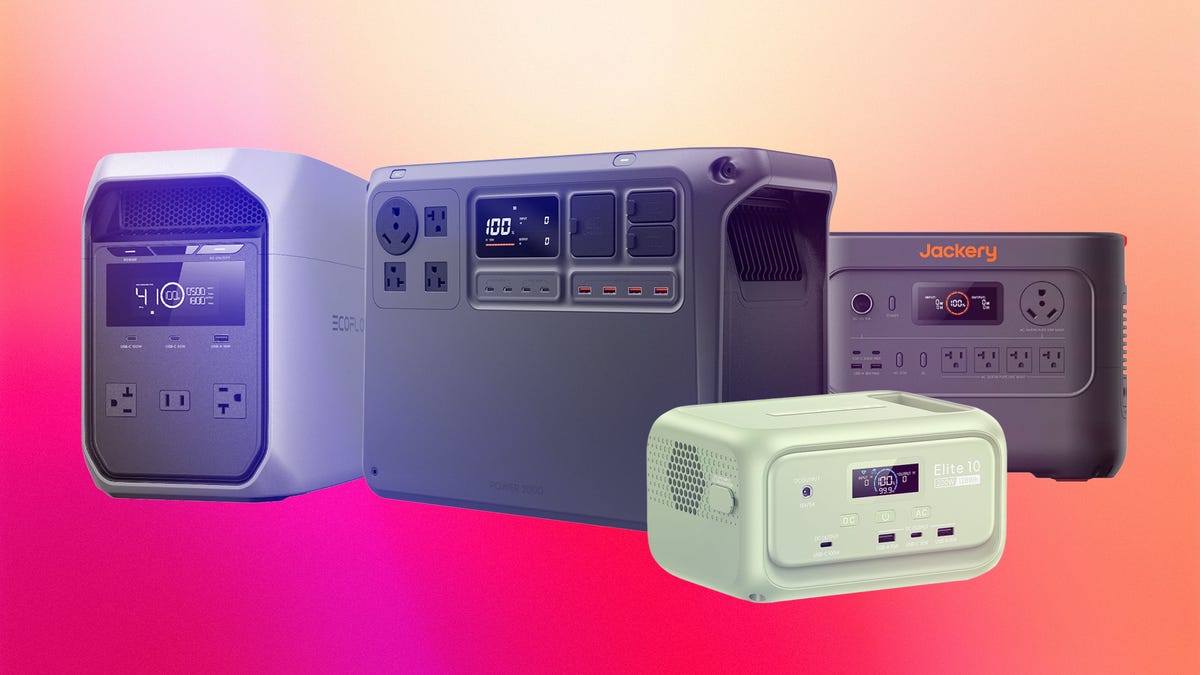
These are units that scored at least a 7 or higher and were strong contenders for earning a spot in the best list. They may have not made the final cut, but they’re still a worthy buy for certain use cases.
Bluetti AC200L
The Bluetti AC200L nearly made the cut for our main list, but it narrowly dropped out due to the highly competitive large-unit market. Still, there’s a lot to like about it, with a 2,048 Wh capacity, 2,400W output, and a solid 77.67% round-trip efficiency. In our lab testing, it excelled as an absolute powerhouse for running cyclic appliances, keeping our test fridge alive for a massive 29 hours and 16 minutes with a low 22.16% overhead loss. It missed out on the main “Best for RVs” designation only because the Anker Solix C2000 Gen 2 edged it out on raw charging speed and weight. At 62.4 pounds, it is a bit heavy, but with its native RV port, 10 total outlets, and robust appliance runtime, it remains a fantastic fit for anyone needing serious off-grid power or dependable backup for a home refrigerator.
Bluetti FridgePower
Custom-built with a specialized slim form factor, the Bluetti FridgePower is designed specifically to slide directly behind a kitchen refrigerator. It packs a 2,016 Wh capacity into a lightweight 23-pound chassis, yielding an unmatched 70.48 Wh/lb energy density, an impressive 80.32% RTE, and a rapid 1-hour, 56-minute charge time. It didn’t make our primary list because it’s a niche product lacking a standard breakout of diverse output ports and flexible charging options (it only supports AC input). However, if you’re looking for a backup dedicated entirely to keeping your kitchen food cold without taking up too much space, it ran our test fridge for 23 hours and 26 minutes and is perfect for that specific role.
Bluetti Apex 300
With a substantial 2,764 Wh battery capacity, the Bluetti Apex 300 delivered long-lasting performance during our appliance test, powering our refrigerator for 30 hours and 26 minutes. Ultimately, it was held back by a mediocre 66.63% round-trip efficiency score and a relatively sparse selection of just seven output ports. It takes 2 hours and 25 minutes to top up via AC and supports solar. It remains a good choice for someone who wants long home backup runtimes for a single appliance and cares more about raw battery size than overall efficiency or versatility.
DJI Power 2000
The DJI Power 2000 is a capable large power station offering a 2,048 Wh capacity and a standard mix of AC and USB ports that recharges in a swift 1 hour and 59 minutes. While its 72.61% RTE score is fairly average, it demonstrated excellent idle efficiency during our appliance evaluations, suffering only a 17.54% heat-and-overhead loss while running our test fridge for 22 hours and 25 minutes. It missed the main list because its midtier scores left it overshadowed by higher-value competitors in the 2kWh class. It’s still a great fit for people who are looking for a steady, fast-charging unit that won’t bleed power while idling between appliance cycles.
Bluetti Elite 10
The Bluetti Elite 10 is the ultimate ultra-portable option, prioritizing a lightweight physical build over raw energy. It weighs just 6 pounds and features a modest 128 Wh capacity, delivering 100.94 Wh of active energy at a 66.76% RTE. It was excluded from our main lists since you’re paying a steep premium per watt-hour for its downsized frame. It also takes 2 hours and 22 minutes to charge from AC. It’s a specialized buy, but it remains a perfect match for minimalists, hikers or commuters who strictly want a lightweight battery to charge phones and tablets on day trips without carrying extra bulk.
Fossibot 3600 Pro
A previous winner, this is still a good option for heavy-duty emergencies. The Fossibot 3600 Pro boasts a massive 3,840 Wh capacity, a potent 3,600W output, and a solid 77.84% RTE. It is the undisputed champion of emergency appliance endurance, keeping our test fridge running for nearly two full days (44 hours and 39 minutes) with a 26.11% overhead loss. It failed to land a spot on our main recommendations due to its 92.59-pound weight and a sluggish 3-hour, 36-minute charge time. If portability isn’t a concern and you simply want a stationary home backup anchor that can run high-draw power tools or sustain essential medical and kitchen appliances through multiday blackouts, this is a great heavy-duty solution.
Jackery HomePower 3000
The Jackery HomePower 3000 is a robust extra-large station that balances a big 3,072 Wh capacity with an efficient 78.35% round-trip efficiency score. In our labs, it delivered 2,758.98 Wh of active energy and kept our test fridge powered for 32 hours and 3 minutes, though it did experience a higher 36.40% overhead loss during cycling. It missed the final cut because Jackery’s own newer “Plus” version vastly outclassed it in efficiency and idle management. It remains a steady, reliable secondary option for home emergency backup if you can find it at a discount.
Cybpulte C601
The Cybpulte C601 is a small budget unit that offers a 299 Wh capacity and outputs 234.31 Wh of active energy at a 67.94% RTE. It missed out on a main list recommendation because of its painfully slow 5-hour, 15-minute recharge time, which severely limits its readiness in a pinch. It is still a decent fit for price-conscious casual campers who can leave it to charge overnight and only need to keep small electronics like phones, cameras or lanterns running over a weekend.
Anker Solix C300
The Anker Solix C300 AC is a small-capacity power station that pairs a 288 Wh battery with a lightweight build, a carrying handle and a built-in LED light. It’s a great camping option and came close to earning a spot on our list, but it’s held back by a 68.71% RTE score that’s somewhat on the lower side and it extracts 238.14 Wh of active energy. On the upside, it features blazing-fast recovery, topping off via AC in just 1 hour and 18 minutes. It’s also super affordable and is often found on sale for less than $200.
EcoFlow Delta 3 Plus
The EcoFlow Delta 3 Plus is a fast-charging medium station that features a 1,024 Wh LiFePO4 battery, a 79.37% RTE, and 10 output ports (including 3 AC outlets and 2 USB-C ports). It is a fast charger, taking just 49 minutes to fully charge. It missed our best affordable spot because its sibling, the Delta 3 Classic, offered a higher port density, better efficiency, and a significantly friendlier price tag. It is still a fantastic solar-friendly choice for off-grid folks who need a reliable midsized power station that can be juiced back up to full in under an hour.
Duracell G800
The Duracell G800 sits in the small-to-medium class with a 620 Wh Li-NMC battery and an eight-port layout containing 3 AC and 2 USB-C outlets. It extracted 503.05 Wh of active energy in our testing, but it was dragged down by a lower-tier 65.90% RTE and a slower 3-hour, 37-minute charge speed. It was kept off our primary list due to this combination of sluggish charging and low conversion efficiency relative to its price. It remains a viable option for people who prioritize Duracell as a brand or those who like the carrying handle and built-in light and want reliability to run a mix of devices.
Anker Solix F3800 Plus
The Anker Solix F3800 Plus is an extra-large station boasting a 3,840 Wh capacity, a massive 6,000W output, and an array of specialized ports like a 240V NEMA L14-30 and an EV charging port. It missed the main list due to its heavy 136.7-pound weight and a severe 46.63% inverter overhead loss, which wasted nearly half its active energy just keeping the unit turned on (running our test fridge for a relatively low 25 hours and 41 minutes). It is an excellent match for homeowners looking to integrate a stationary unit directly into a transfer switch for high-draw emergency circuits, or EV drivers looking for something that can top up their vehicle while camping.
Grecell H2400
The Grecell H2400 is a moderately efficient large option that offers a 1,843 Wh capacity, a solid 79.29% RTE score, and a quick 1-hour, 39-minute AC recharge time. It has nine output ports and kept our test fridge running for 17 hours and 45 minutes with a 26.82% overhead loss. It failed to make the primary cut because its shorter fridge runtime left it outpaced by more well-rounded 2kWh units like the Dabbsson and Bluetti models. It remains a good choice for someone looking for an affordable backup unit that favors quick recharging.
Oupes Mega 5
Boasting the largest physical battery capacity in our test lab at a massive 5,040 Wh, the Oupes Mega 5 is a heavy-duty LiFePO4 station with 12 output ports. It yielded a massive 4,352.86 Wh of active energy and kept our test fridge running for 43 hours and 43 minutes. It missed our main list because its score was penalized by a sluggish 3-hour, 35-minute charge time and a high 39.75% idle overhead loss, both of which indicate poor conversion efficiency. It’s still a worthwhile investment for those who strictly want maximum raw battery capacity to sustain multiple household devices across multiday blackouts.
Read the full article here