







What’s in your water?
The best place to start is by testing your own water to identify the issues. Roughly 85% of homes in the US use municipal or city water, which is closely monitored, tested and treated. That said, the city has no control over what happens to your water once it reaches your home.
Old pipes and faulty systems within your home can leech harmful contaminants, including lead, copper and plasticizers into water. As water scientist Dr. Eric Roy explained to CNET, “Your neighbor might not have lead in their water, but that doesn’t mean you don’t.”
Getting your water tested through a reputable lab, such as Tap Score, can help you determine what’s in your water and decide on the best course of action, including which filter to use.
You can also test your water for PFAS (forever chemicals), microplastics, agricultural pesticides, bacteria, disinfectant byproducts and other contaminants.
Those with well water are encouraged to test it once a year, as it is more susceptible to bacteria, nitrates and high levels of total dissolved solids. Tap Score offers an at-home test kit specifically for well water.
Type of filters
Once you know what’s in your water, you can make an informed decision about the type of filter to buy.
- Reverse osmosis: Using a fine membrane, this is the most complete filter among consumer types. Reverse osmosis filters are also the gold standard for removing lead, PFAS and fluoride. They require electricity and generate wastewater during filtration.
- Charcoal/carbon: Not as powerful as reverse osmosis, carbon or charcoal filters are cheaper upfront, but typically have a shorter lifespan. Many systems use gravity instead of electricity to force water through carbon filters.
- Ion exchange: Specialty filter that uses electropositive charge to bind certain contaminants, while leaving some minerals and heavy metals in water.
Water filter certifications: Official certifications vs. filters tested to meet standards
Official water filter regulatory bodies set some of the highest standards, and there are currently four widely recognized certifications for water filters.
The National Sanitation Foundation and the American National Standards Institute (ANSI) are the two main drivers and developers of water filter performance standards. Water Quality Association and International Association of Plumbing and Mechanical Officials are ANSI-accredited, third-party laboratories that test products against NSF/ANSI standards.
Water filter manufacturers can choose to submit their products for various contaminant-removal certifications with one of these four bodies. Because of the high cost — filters must undergo expensive testing for individual contaminants — many choose to test to NSF/ANSI standards in their own non-ANSI-accredited labs. These tests and results are not regulated and thus carry less weight than those from official, accredited laboratories.
Cost and usability
The best filter is ultimately the one that targets your water pain points and fits into your lifestyle. Water filter pitchers are the easiest and cheapest options, but most have limitations on what they can filter.
Whole-house systems filter water as it enters your home, not just the drinking water, so these are best if you’re concerned about hard bathing water or volatile organic compounds and disinfection byproducts entering the air through your shower. These systems are often the most expensive and require installation.
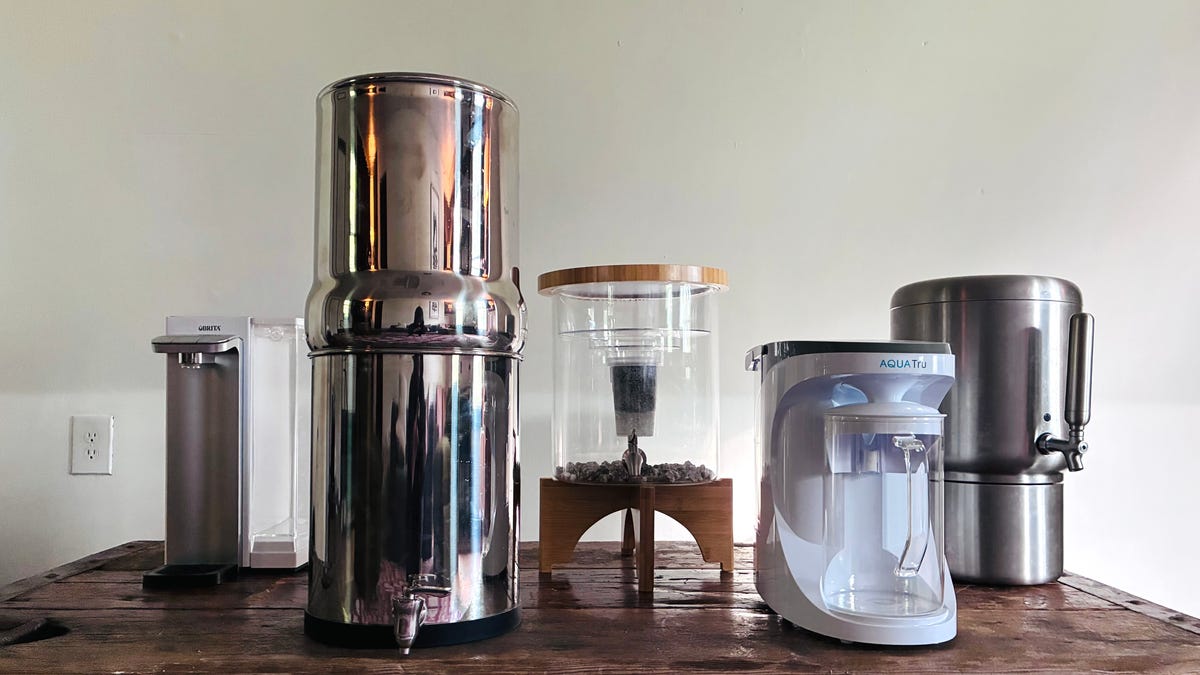
Countertop models like the ones we tested are somewhere in between. Many offer more complete filtration than filter pitchers, but without the installation headache associated with whole-home filters. That said, they require cleaning and maintenance and take up real estate on your kitchen counter or elsewhere.
Read the full article here


