





Online dating has rapidly progressed from a little secret reserved for casual encounters into an everyday, booming business. Tinder, Hinge, Grindr, Bumble, Raya, Match and OKCupid are only a handful of the most popular dating apps, promising your “happily ever after” is just a few or a few thousand, swipes away.
Yeet, a newcomer to the Gen Z dating app game, does away with swiping altogether. It also comes equipped with Yeeta, marketed as the “world’s first AI dating agent.” The app’s unique appeal leans on artificial intelligence acting as a matchmaker to help you build a connection before you ever meet IRL.
Yeet is based on a broad AI system that integrates multiple algorithms, depending on the task, with the model processing everything from emotional signals to real-time conversational dynamics, said Penny Chen, co-founder and marketing head at Yeet.
Think of it like a well-meaning friend third-wheeling it on first dates and offering advice to keep the ball rolling.
If you’re an exhausted dater who’s fed up with filling out forms and perfecting your profile, Yeet might offer a welcome respite. But letting an AI bot into your flirtatious conversations in real time could come with its own set of issues.
How Yeet works
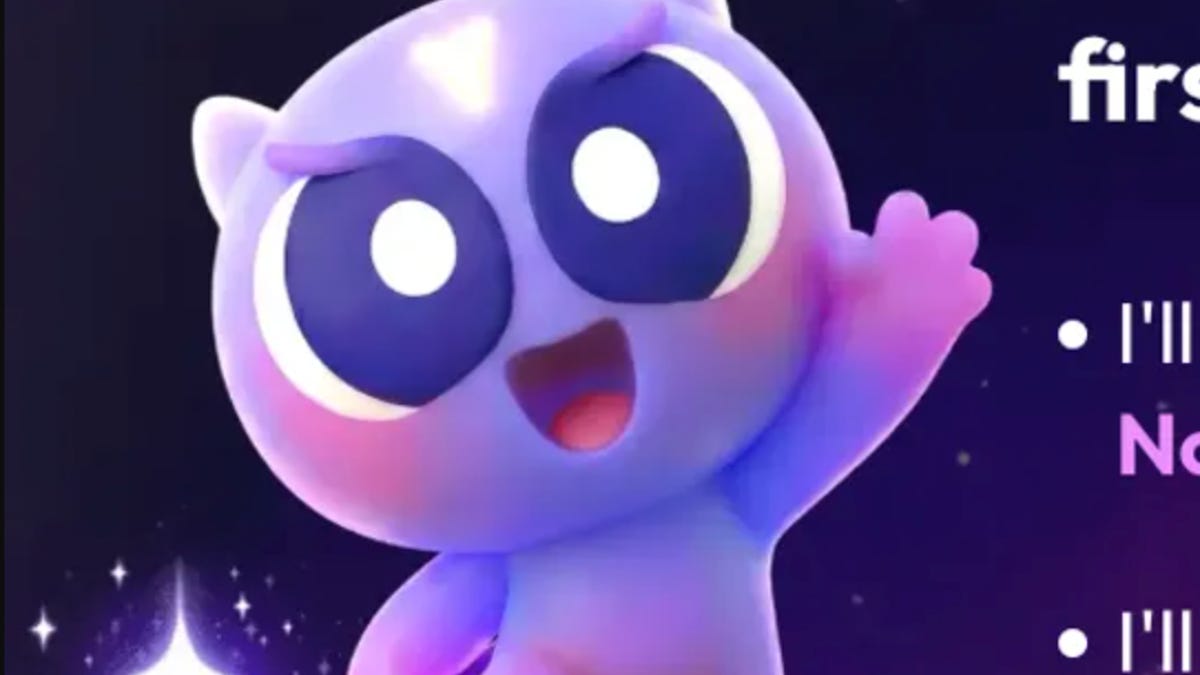
The minute you open Yeet, you’re met with a friendly message from Yeeta, the purple love bug bot that serves as your guide and always-on chat companion.
Yeeta AI is incorporated into every element of the app’s experience. It’s most useful in helping romantically inclined users avoid the dreaded “Sup” and one-sided conversations that have plagued digital love-makers since the dawn of the dating swipe.
Yeet uses AI image recognition to handle the heavy lifting of building almost all the elements of your profile, letting you skip the introspection and get straight to matches.
Rather than having to build a bio from scratch, I uploaded a few pics of myself and let Yeet write the accompanying blurbs, called “vibe codes,” that built my profile.
Yeet’s AI checks the “vibe” by analyzing photos and short phrases you provide for context clues about who you are. If you upload a pic of yourself at a football game, the blurb might mention the “stadium lights and school spirit.”
Yeet’s AI also provided feedback about the overall impression my uploads gave, including my profile pic, which Yeet softly critiqued as not yet having “peak main-photo energy.”
Whatever it sees, the app will read into the mood and carry those details into your profile and into the chats you have with other users.
“That multiparty, multicontext architecture is what we’ve spent over two years prototyping and iterating on, and it’s where our core technical differentiation lives,” said Chen.
Most of that architecture is built on scraping details from user-submitted images, but according to Chen, Yeet does not perform facial recognition or biometric identification. The app doesn’t store biometric data or facial recognition profiles, and the company says all photo analysis is processed in real time to generate vibe codes and conversation context.
Yeeta the wingbot
Yeet works as a chat-based matchmaker, without the swiping feature that has become standard on most dating apps. Once you’ve downloaded the app and provided it with at least one photo and your location, it sets to work matching you with potential chat partners to see if you “vibe.”
Yeet regularly offers up chat partners from the app’s user pool if you’ve got the app running. The AI also has a function within the chats to either offer a topic of conversation to get (or keep) the ball rolling, or play a trivia game aimed at helping you get to know the other person.
You can also chat solo with Yeeta about anything dating-related, but the AI will balk at nonromantic conversation. When I asked Yeeta for a recipe for dinner for a family of six, she hit me with the sassy reply, “Girl, I do dating, not Top Chef for six,” and redirected me by offering to help plan a meal that might impress a date.
It also has a feature that nudges you to avoid generic openers and nonspecific conversation, like “wyd” and “hey.”
I tried having a super dry conversation with a user, and Yeeta hopped into the mix when my chatting partner told me he was headed to work at “DG.” Turns out it was Dollar General, which Yeeta coaxed him into revealing by telling him to “drop a quick fun detail about your DG gig so she’s got something juicy to bite on.”
Quite the spicy phrasing for a conversation about the dollar store.
“The goal isn’t to police what users say,” says Chen. “It’s to help them show up more fully in a conversation, especially in those first few seconds where most dating app interactions die.”
I tried both the topic suggestion and playing a personalized trivia game with the Yeet AI tool, and the results were mixed. Yeeta pulled my chatting partner and me into a little side room and gave me some options for topics in a multiple-choice game meant to help us get to know each other.
Yeet’s AI asked me a question about DJing: What kind of music would I play to get the crowd hyped? Of the three options, “Movie quote,” “Dog bark,” and “Funk record,” I chose the least obviously unhinged, which was funk record. Although one could argue that playing the sound of dogs barking repeatedly is one way to assert dominance over the room.
It turns out, Yeet’s AI had crawled my chatting partner’s profile and used a pic of him on the ones and twos as a launching pad for the topic of our game.
Again, information scraped from photographs is the basis for most interactions with Yeeta, but it’s not yet a perfect system. No AI tool is. It’s also up to the you to engage Yeeta in the chat. The bot won’t just hop into the conversation without one of you tapping its icon, but Yeeta is always “watching the chat,” so consider that before firing off anything NSFW (not suitable for work).
Even though it’s clear the AI is active in every interaction on the app, none of my chatting partners batted an eyelash at Yeeta looking over their shoulders. When I asked another of my vibe-chatting partners how he felt about the AI building his profile from information in his photos or from watching us talk, he said the results were “incredibly vague,” but he thought the app was “funny” and got a kick out of the programming. No red flags or worries there.
Openly vibing
Yeeta’s comments are visible to both of you while it acts as an in-chat social director, urging you to ask more about the other person’s interests. But the course of true love never did run smooth, so Yeeta made a few mistakes.
In one chat, we had already confirmed my partner’s interest in DJing, yet the AI treated it as something that still needed to be further explored.
This user was the only one of the three I chatted with who would go on record about their opinion of the app’s AI functions and tools. His general impression was that it was less than useful for making real connections, but an interesting gimmick that needed fine-tuning.
Most other men I chatted with generally ignored the AI elements, describing them as a fun novelty they hadn’t fully explored. The in-chat games and conversational suggestions from Yeeta kept things moving when they stalled, but to the shock of no heterosexual woman on Earth, I was the one asking for Yeeta’s input 99% of the time.
To Yeet or not to Yeet
Yeet is fun overall, and sometimes funny because of its foibles. The app almost makes good on its promise of an easy, no-drama profile-building experience, but ends up making a lot of assumptions.
In my experience, the app appeared to throw people together mostly based on location proximity, or who was active in the same window of time, with some details it can glean from images tossed into the conversational mix.
Photos can say a lot about a person within the context of their dating profile, but to an AI trained to look for and catalog patterns in photographs, it’s a goldmine for misunderstandings. While you might think uploading a pic of the snazzy suit you wore to a beach wedding shows you in a positive light, Yeet’s AI tool could assume you’re just a dude who likes wearing tuxedos in the sand and edge you toward talking about the benefits of rocking pennyloafers at the water’s edge.
Maybe it comes down to your own judgment, since this is a dating app designed to train an AI to highlight your defining traits from photos you provide. If you’re going to use Yeet, be careful about which photos you share with it, lest your entire experience be based around something you’ve only done once.
Read the full article here