

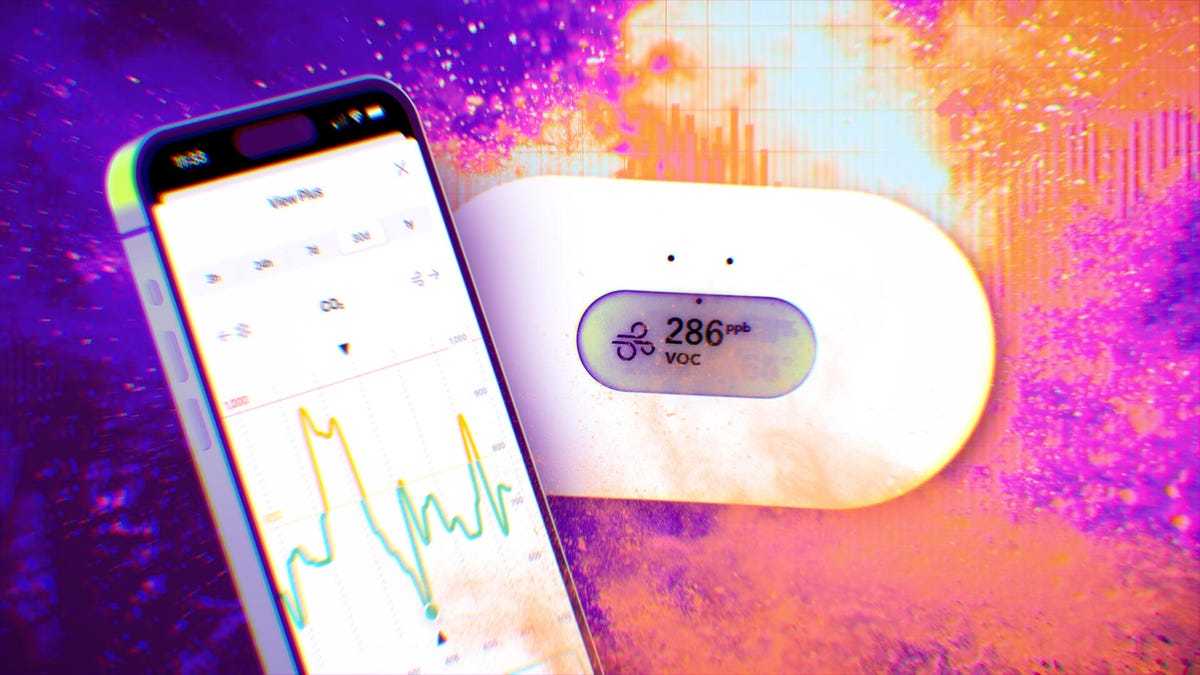
Our homes provide shelter to keep us safe, but they can’t protect us from everything — especially the air we breathe when inside. Yet, knowing when your air quality is poor can be particularly challenging because it’s something you can’t see, hear or (usually) smell, but it can have a significant impact on your health.
To learn more about why air quality can be poor and the health effects it can cause, three CNET wellness and smart home experts began monitoring air quality in different locations across the US. These are the most surprising facts about air quality we learned, and what experts taught us about how to improve the air we breathe.
The air quality monitors and locations
Aly lives in Reno, Nevada, and has been using the Blueair Classic Pro CP7i air purifier, which has sensors to monitor air quality, for the past 2 months. Tyler resides in Bend, Oregon, and has been testing the Switchbot Meter Pro, a simple, affordable air quality monitor, for 8 months. As for Anna, who lives in Los Angeles and has been monitoring her air quality with the Airthings View Plus, Wave Enhance and Renew air purifier for over 2 months.
1. Humidity impacts PM2.5 particles
As someone with frequent sinus issues, Anna often depends on her humidifier to relieve congestion and prevent dryness. However, whenever her humidifier turned on, she noticed that her air quality monitor (on both the Wave Enhance and Renew air purifier) would turn red. Upon checking her app, she realized that PM2.5 particles specifically increased.
“While there is no direct causation between one and the other, PM2.5 particles (like dust or smoke) are often hygroscopic, meaning they absorb water from humid air,” says Joakim Lindh, head of strategic growth at Airthings. “When humidity rises, these particles swell up, so a particulate matter monitor may then read them as more numerous or larger, skewing the PM2.5 value upward.”
Lindh adds that it’s also important to note that dust mites can’t survive without humidity from the air. They like moderate temperatures and high humidity, since they can absorb water from the moisture in the air. “The microscopic creatures can worsen allergies and asthma, so making sure that humidity levels are not too high is key to minimizing them and their effects,” he explains.
Airthings recommends a humidity range of 40% to 60%, especially in summer, because warm air can absorb more moisture than cool air.
2. Gas stoves and ovens increase VOCs
Anna has the Wave Plus set up between her kitchen and living room. VOCs quickly increase whenever she turns on her gas stove or oven. The EPA states that VOCs are human-made chemicals emitted as gases from certain solids or liquids, such as paints, cleaning supplies, building materials and furniture.
When asked why this happens, Lindh says, “Gas cooking uses the process of combustion, where natural gas is burned off, which creates heat. When this combustion occurs in your home, the chemical reaction releases pollutants into your air, including ultrafine particulate matter, as well as VOCs like nitrogen oxides or even deadly carbon monoxide.”
Using gas stoves can cause asthma and lung irritation, and gas leaks of unburned methane can worsen these effects. Lindh states, “Signs of a gas leak include discolored flames, reduced oxygen levels, dead houseplants, fatigue, dizziness or a putrid smell from around your gas stove.” This can be caused by a poorly fitted installation or repair, gas pipe corrosion or loose connective joints. He adds that research shows that harmful gases were leaking into the air even when non-faulty stoves were turned off.
3. Gas stoves, ovens and fireplaces can also increase CO2 levels
Tyler generally keeps his SwitchBot Meter Pro in a central location between his kitchen and dining table. He, too, noticed that carbon dioxide readings specifically spiked when using his gas stovetop and oven, especially for long roasting sessions. Watching the SwitchBot readings, he found it took around 12 hours or longer for carbon dioxide levels around the kitchen to decrease.
Another source of carbon dioxide levels for the SwitchBot monitor? Tyler’s natural gas fireplace, which didn’t cause the same spikes as cooking but still lifted the overall particle count in his house when in use. And opening windows isn’t always an option — Tyler’s Bend location gets a lot of West Coast wildfire smoke during the later summer months, which also noticeably increases indoor carbon dioxide levels even when windows stay shut tight.
4. No ventilation can increase carbon dioxide, which can impact sleep
One of the notifications Anna often gets on her phone is that the carbon dioxide level in her bedroom is high and that she should open a window for ventilation. High carbon dioxide levels can also lead to poor sleep quality, so ventilation is essential once you hit the hay.
“Carbon dioxide, productivity and health are closely linked,” Lindh explains. “High concentrations are associated with restlessness, drowsiness, headaches and poor concentration.”
Since we all breathe out carbon dioxide, it builds up in the home, especially in areas without ventilation. This is particularly the case in modern homes that are airtight to save on energy costs, and since many ventilation systems recycle air in the name of efficiency.
“When people are sleeping, research shows that concentrations of CO2 are three to five times higher when the bedroom window is closed — this means you’re less likely to fall asleep or wake up feeling refreshed,” explains Lindh. “Carbon dioxide is also linked to conditions like sleep apnea, and it’s thought to trigger neurons that can rouse you from your sleep.”
5. Leaf blowers outside increase PM2.5 inside
Even though Anna lives in Los Angeles, where they don’t have to deal with piles of fallen leaves during the fall and winter seasons, leaf blowers are abundant. After the Southern California wildfires in January, people were advised to avoid leaf blowers to prevent kicking up pollution into the air. But now, they’re back, and whenever she hears one running outside, she always sees the PM2.5 particles increase on her Wave Plus monitor.
“There are three main ways that leaf blowers can be a sneaky source of particulate matter inside your home: infiltration, HVAC systems and open doors and windows,” Lindh states.
Infiltration can occur when fine particles like dust, pollen, mold spores, and soot are stirred up by leaf blowers and enter buildings through gaps in doors and windows, cracks in the foundation and poorly sealed HVAC systems. “PM2.5 is so tiny it can easily bypass weak seals or filters,” Lindh adds. If a leaf blower is used near an HVAC intake vent, the system can suck the particles inside and distribute the PM2.5 throughout your home. The same goes for open doors and windows.
6. Mattresses and bedding can increase VOCs
Your bed is another factor that can affect the air quality in the bedroom. Many mattresses contain VOCs and can release them through a process called off-gassing. Commonly used materials, such as polyurethane foam, certain types of memory foam, adhesives and flame retardants, can have short- and long-term effects on respiratory health. The pressure and heat from our bodies while lying on the mattress can increase the release of these harmful VOCs.
A recent study by the University of Toronto discovered elevated levels of harmful chemicals in children’s bedrooms, including flame retardants, UV filters and phthalates. Phthalates are synthetic chemicals used in many everyday household items, including plastic products, food packaging, fragrances, personal care products and children’s toys. They have been found to harm the endocrine system and can lead to hormone issues and other health problems.
In addition to adding an air purifier to the bedroom, you can minimize the impact of VOCs while you and your children sleep by:
- Give your new mattress a few days to off-gas after unboxing it
- Opting for a mattress with natural latex foam and green certifications
- Choosing neutral-colored bedding (brands often add UV filters to bright-colored products to prevent fading)
- Washing bedding and pajamas often
- Regularly cleaning and airing out the bedroom
- Keeping toys and stuffed animals out of the crib or bed
7. Cleaning products can increase VOCs
Aly’s Blueair Classic Pro CP7i air purifier is centralized on the first floor of her home, so it’s affected by regular cleaning of all the surrounding rooms, including the kitchen, dining room, living room, bathroom and cat litter box area. She has found that certain cleaning products trigger the air purifier, especially when doing a longer deep clean with products such as disinfecting bleach spray and scented wet cloths for floor mopping.
It feels counterintuitive that cleaning your home can negatively impact your respiratory health, but Odile Liu, Blueair’s chief product officer, explains, “Many conventional cleaning products — especially those with added fragrances — can release VOCs that trigger your air purifier. Scented sprays, bleach-based cleaners and products with synthetic fragrance blends are common culprits. These chemicals can linger in the air and may contribute to respiratory irritation, particularly for those with asthma or allergies. To minimize indoor air pollution, look for fragrance-free or low-VOC cleaners.”
It’s also best to ventilate your space and open the windows while cleaning with chemicals to help prevent the buildup of harmful fumes or toxins. If you have a cat litter box in your home like Aly, consider placing an air purifier near it to reduce odors and dander. “It’s especially helpful in smaller or poorly ventilated spaces where smells and particles can linger. For those with pet allergies, using a purifier with both a HEPA and activated carbon filter is key, as it helps capture allergens and neutralize odors,” Liu says.
8. How air temperature and pressure can affect indoor air quality
In addition to VOCs, PM2.5, radon, carbon dioxide and humidity, Anna’s air quality sensors also display air temperature and pressure. When asked how they impact indoor air quality, Lindh explained, “Temperature and air pressure don’t necessarily impact indoor air quality directly, but they can facilitate and serve as a proxy for the impact of other more influential pollutants such as particulate matter, VOCs, radon and more.”
As an example, Lindh states that chemical off-gassing increases with heat. This means that “higher temperatures can cause materials like paint, cleaning products, plastics, and furniture with various varnishes and finishes on it to release more VOCs.” Dust mites, mold and bacteria also typically flourish in warmer, humid air.
“Air moves from high to low pressure. So, if indoor pressure is lower, outdoor air (and pollutants) can get sucked in through cracks or vents,” adds Lindh. “Buildings under negative pressure due to exhaust fans or unbalanced HVAC systems can draw in radon, smoke or VOCs from crawl spaces, attached garages and the outdoors.”
9. Certain cookware and oils increase VOCs
The Blueair Classic Pro air purifier Aly uses has a dual filtration system that removes 99.97% of airborne particles as small as 0.1 microns, including bacteria, viruses, smog and smoke. The air purifier’s front digitally displays the air quality (specifically, the amount of particulate matter detected) in real time.
Natural gas stoves tend to emit more VOCs than electric stoves, so Aly wasn’t expecting her electric stovetop to significantly affect air quality. The first time Aly cooked in her kitchen after installing the air purifier, she was surprised to hear it kick on and start whirring, indicating a significant increase in VOCs — even with proper kitchen ventilation and the exhaust fans on high. The app showed that the air’s PM10 spiked to 178, PM2.5 to 150 and PM1 to 109, which the purifier considers “very polluted.”
Liu explains: “Cooking — even on an electric stovetop — can release fine particles, volatile organic compounds and grease aerosols into the air, especially with high-heat methods like frying or searing. Certain oils with low smoke points, like sesame or unrefined olive oil, and Teflon-lined cookware can also contribute, potentially triggering your purifier’s sensors. Using a range hood, ventilating the space and running an air purifier with HEPA and activated carbon filters can help minimize buildup and odors.”
After experimenting, Aly could confirm that using certain pans, particularly nonstick cookware, increased the PMs detected by the air purifier. Since learning that cooking fatty meats and other foods at high temperatures increases the amount of VOCs released, Aly has been using her outdoor grill when cooking those meals instead.
How to prevent poor indoor air quality
Lindh emphasizes that knowledge is power, so measuring and monitoring air quality over time can provide insights into potential pollutants. “From there, you can introduce additional solutions such as purifiers, upgrades to your HVAC system or radon mitigation, based on what the data is telling you,” he concludes. “Air quality can be a scary thought since it’s an invisible threat, but it doesn’t have to be.”
Liu adds, “Whether you’re a pet owner, a parent or someone managing asthma or allergies, an air purifier can make a meaningful difference.” She states that they can be beneficial in bedrooms and nurseries to support sleep quality or in high-traffic areas where you spend the most time, like the living room or kitchen. “Prioritizing these shared spaces helps ensure the air you and your family breathe most often is as clean as possible,” she says.
Read the full article here