



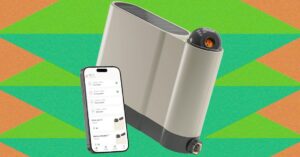



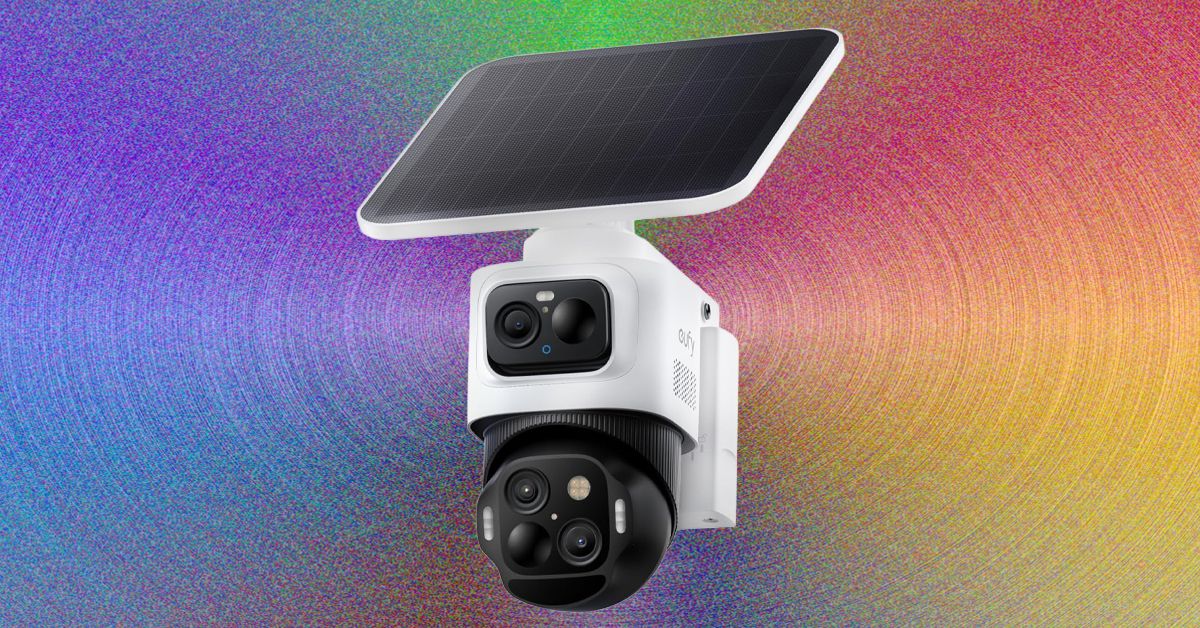
Local Hub: Manufacturers like Eufy and TP-Link offer smart hubs that link wirelessly to their security cameras and offer expandable storage. Sometimes these local hubs allow for more local AI processing (Eufy’s hub enables facial recognition). They can also sometimes extend the wireless signal and stability for cameras. These hubs often need to be plugged directly into your router via Ethernet cable.
MicroSD Card: Plugging a microSD card into a camera is a quick and simple way to record locally, but if an intruder steals the camera, your footage is gone with it. Occasionally, camera manufacturers offer indoor hubs that are expandable via a MicroSD card.
Network Attached Storage (NAS): If you have a NAS server, you can likely configure it to store your security camera video. These devices contain hard drives and are expandable, offering a potentially enormous amount of storage.
The best USB flash drives and external hard drives can be used to expand or offload footage from some of the above.
Cloud vs. Local
I have a guide on Cloud vs. Local security camera footage that covers the basic pros and cons in more depth, but to sum up briefly:
Cloud storage means your video is backed up online, so an intruder can’t get to it, it is usually quicker to access or stream when you are away from home, and it doesn’t require any additional storage hardware. On the downside, you pay a monthly fee, the video doesn’t get uploaded if your Wi-Fi fails or is scrambled, and you are trusting the service provider, who may share it or use it in ways you’d prefer they didn’t (data breaches are also common).
Local storage is a one-off cost, it’s not reliant on Wi-Fi, and it’s much harder for anyone other than you to access the footage. But, there’s a risk someone steals the physical hardware your footage is stored on, or the hardware fails, and it can be slower to access and stream video when you are away from home.
For maximum security, even with a local system, you might consider a cloud backup. You can reduce the risk of your footage being exposed by picking a cloud service that is end-to-end encrypted, such as Apple’s HomeKit Secure Video.
Protecting Your Privacy
Access to your security camera feeds and recorded videos should be end-to-end encrypted, and you should always use two-factor authentication to protect account access. With end-to-end encryption, only your authorized devices can decrypt your videos. With 2FA, you will be sent a passcode to a trusted number, email, or device when you try to log in on a new device, so your login and password alone are not enough to gain access. Sadly, these features are not always turned on by default.
- Eufy cameras offer end-to-end encryption, but you must opt in by tapping the menu top left in the app and choosing Settings, Security, Video Encryption, Advanced Encryption. You can make sure 2FA is toggled on by tapping your name at the top of the menu and Two-factor authentication.
- TP-Link Tapo cameras lack end-to-end encryption, but you can set up 2FA for your account by tapping on the Me tab, View account, Login Security. To encrypt footage on microSD cards, go to your device settings and choose Storage & Recording, Local Storage, and tap SD Card Encryption.
- Aqara offers end-to-end encryption on your locally stored video by default. For 2FA, tap Profile at the bottom right, Settings, Accounts and Security, and make sure Two-Factor Authentication is toggled on.
Read the full article here


