

If you’ve ever come upon a hunk of moldy cheese that had no business going bad as quickly as it did, it might be your storage method. As convenient as plastic wrap may seem, it’s one of the worst options for storing cheese. Plastic suffocates cheese, degrades its texture, mutes its flavor and can make it spoil faster.
So what should you do instead? I went straight to an expert. John Montez, certified cheese professional and head monger of Murray’s Cheese in New York, has the answer — and it’s simpler than you’d think. His top rule: ditch the plastic. Cheese is a living thing that needs to breathe. Wrap it in wax paper or parchment first, then loosely cover it with foil or place it in a container, and it’ll stay fresh for weeks — whether you’re working with a creamy brie or a sharp cheddar.
Montez puts it plainly: “Cheese is a preserved product. It’s high in acid and salt, with much of the moisture removed. It’s rare you’d need to throw out a properly stored piece.” In other words, a little know-how goes a long way. Store your cheese the right way, and you’ll always have a perfectly fresh bite ready and waiting — no waste, no disappointment.
With Montez’s help, here’s everything you need to know about cheese, including the best way to slice cheese and how to store it — even the fancy kind — so you never have to waste any.
Cheese is a living thing
Certain cheeses, like blue cheese, wear their mold more proudly than others, but it may be helpful to think of cheese as the controlled decay of milk and know that there’s pretty much always mold involved, regardless. The snowy-white rind of brie and other bloomy-rind cheeses are a type of mold, as is the mottled outer surface of a firmer cheese like Gruyere. Fear not. If you’ve ever taken a probiotic, you already inherently understand that not all microbes are bad.
Read more: Fake Parmesan Cheese Is a Bigger Problem Than You’d Think
This is all to say that, first of all, a little extra mold on your cheese shouldn’t deter you from hanging on to it. “If you see it molds up a little bit, generally you can scrape off that mold and it’s no problem,” says Montez. Because of the lack of water content in cheese, food mold can’t penetrate it very deeply, like it would with many other food products. “Look out if it’s black mold or something like that,” he says, “but the thing is, it’s rare that a piece of cheese becomes unsafe to eat. It’s going to become unpalatable to you long before it’s unsafe.”
Cut your cheese so it’s easier to store
Keeping the cheese palatable, then, is the real goal. How you store your cheese is going to have the biggest impact on its longevity — but how, when and what you cut it with can also play a part in its ongoing flavor and texture success. Precise cuts that leave flat surfaces make it easier to wrap effectively, and keeping the cheese whole for as long as possible also helps its longevity.
“Minimizing the surface area (exposed to air) is going to prevent cheese from drying out or getting moldy,” says Montez. “So, for example, if you’re going to prep cheese ahead of time for a party, the longer you can leave it as a whole piece, the better,” or if you’re a habitual meal-prepper, resist the urge to cut up a whole chunk of cheese for easier access, and just cut as you go.
As for making clean cuts, “you can get done pretty much any job you need to get done with a chef’s knife,” says Montez. “When it comes to softer cheeses, a skeleton knife is good to have as something that reduces the knife’s drag, or a wire-based cheese harp, which is used in a lot of cheese shops. Nowadays, you can even find cheese boards that have a built-in wire. These are really good for leaving as much of the rind intact on bloomy rind and other soft cheeses as you can.”
Wrap your cheese, but don’t use plastic
One of the two main goals when wrapping and storing cheese is to allow a little bit of airflow so that your fancy cheese can still breathe. “The main idea here is you don’t want to wrap it in plastic,” says Montez, “There are a lot of active microorganisms in cheese and you want to keep them alive by the time you’re going to eat it.”
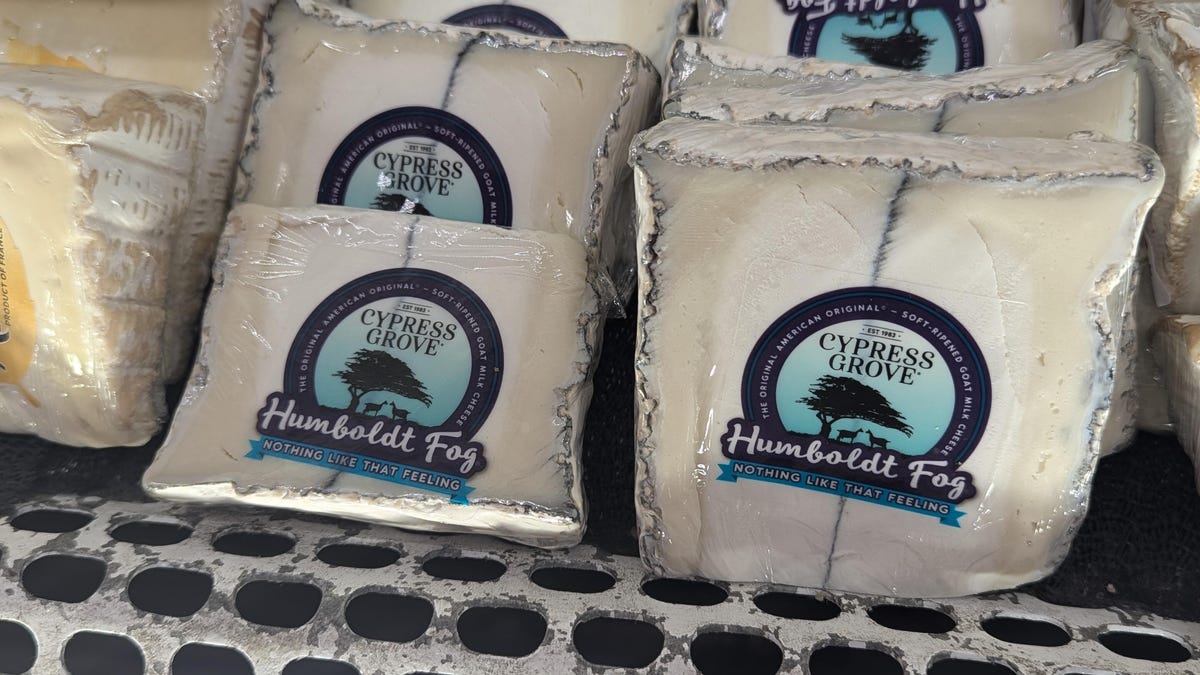
If this piece of advice makes you wonder why the wedge of precut cheese you bought was in plastic wrap, the answer is marketing. “It’s mostly for display purposes,” says Montez, because you’re not likely to buy what you can’t see. “There are cheese shops where they exclusively wrap in paper, but that’s rare. If you’re a big shop that moves a lot of product, it’s not a problem if you know if the cheese is wrapped in plastic for a couple of days, but beyond that, it can be bad for the cheese.”
You can extend the life of your artisanal cheeses by rewrapping them in paper after you bring them home. “Formaticum makes great cheese paper that is specially formulated to keep the outside from drying out while allowing the cheese to breathe,” says Montez. “If you don’t have cheese paper, wrapping it in wax paper, parchment paper, butcher paper or whatever you have is good.”
It can take some serious practice to achieve the crisp folds of experienced cheesemongers with cheese paper. To help, think of your cheese as a little present (which it is, obviously), and wrap it as though you were using festive wrapping paper. “You want the paper making contact with the piece of cheese,” says Montez, “so crease as you go, and make sure all of the faces of the cheese are contacting the paper in an even, flat way.” If this seems at all intimidating, Formaticum also makes handy cheese storage bags that require no origami-level folding.
How and where to store cheese so it lasts longer
“What you’re really trying to accomplish when you store cheese is keeping the cold air from the refrigerator from blowing on it, because that’s going to cause it to dry out more quickly,” says Montez. Wrapped cheeses should go into a drawer in your fridge, into a corner where the fan doesn’t fully reach, or even into a small container with the lid cracked to allow air circulation.
Hard cheeses, or even some softer cheeses you intend to consume within a couple of days, don’t necessarily even need refrigeration. You can simply seek out something to cover them such as a cheese dome, or for the truly committed, a cheese grotto. According to Montez: “Parmigiano Reggiano never needs to see your refrigerator. You can keep it pretty much indefinitely at room temperature.” I guess that answers the question a user had on the r/AskCulinary subreddit about freezing cheese — you can do it but you don’t have to.
For more food and drink storage tips, here’s how long an open bottle of wine will last and how to store your eggs for optimal freshness.
FAQs
Why don’t I want to wrap my cheese in plastic?
Cheese is a living organism — wrapping it up in plastic kills those good microorganisms you want to keep propagating before you eat your wedge. Instead, package your cheese so that it has some airflow.
What if cheese comes wrapped in plastic?
You can unwrap the cheese and rewrap it in cheese paper at home for optimal freshness.
Do I need to throw away moldy cheese?
Not at all. You can scrape the mold off the top layer, and the rest of the cheese is perfectly safe for consumption. Cheese is a living organism, and it’s an ecosystem composed of many microbes. It’s normal for mold to grow on the surface from time to time.
Read the full article here