






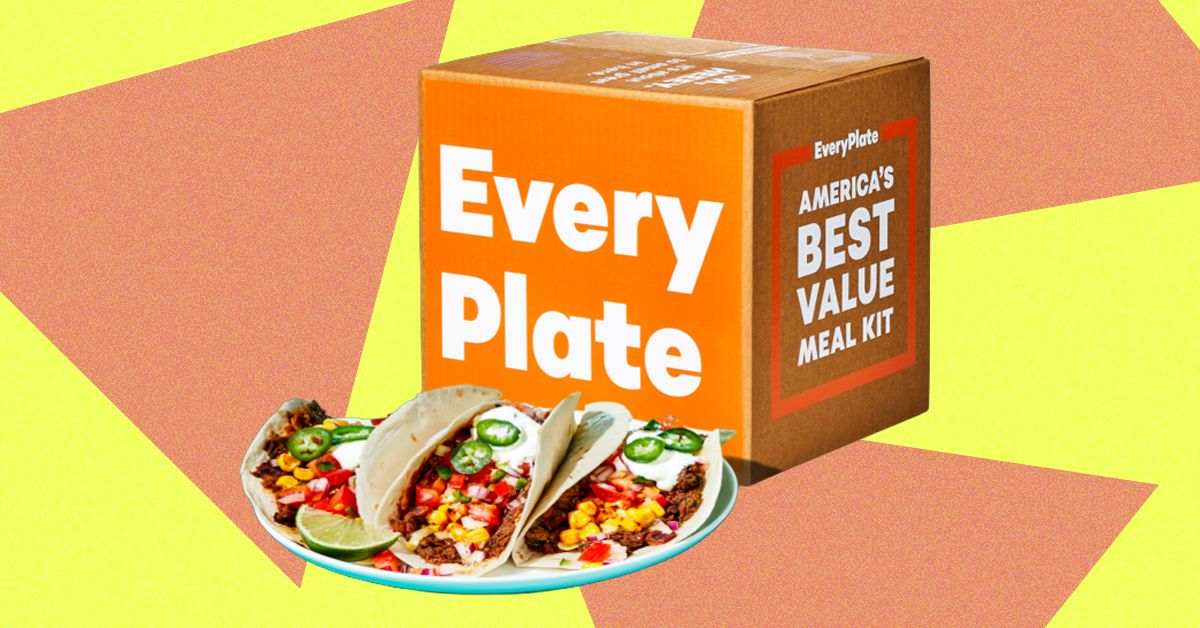
Most plans cost $7 a portion, with an $11 shipping charge for each box. This makes EveryPlate significantly cheaper than other budget kits when cooking for two or four people—which is most households. Note that competitors Dinnerly and Home Chef become competitively priced, or even cheaper, when planning for six-portion meals.
Expect most recipes to take 20 to 45 minutes to cook: As a rule of thumb, take whatever cooking time is printed on the recipe card and add 50 percent. In part, this is because all recipe makers underestimate times. Also because you are probably not a professional cook in a commissary kitchen.
When it arrives, your EveryPlate box will contain recipe cards and a paper bag with most ingredients jumbled together. Meat is kept on the bottom, nestled against an ice pack. Many premium meal delivery plans sort ingredients into individual recipe bags, but this is a luxury you’ll often give up when using budget plans. Either you’ll have to organize ingredients each week as the box arrives, or just expect to do a little rummaging around, especially for the first recipe.
Economy Begets Economy
But while EveryPlate’s costs are low, this mostly does not come at the cost of decent ingredients. EveryPlate uses the same protein purveyors as parent company HelloFresh’s premium plan. The shrimp is domestic, on EveryPlate as well as HelloFresh. The beef and pork and chicken come from multi-generation family purveyors in Texas, New Jersey, and North Carolina. Unlike many meal plans, this sourcing is clearly marked on the packaging. The chicken thigh is well-trimmed and ready to cook. So is a pork chop or a ranch steak.
The key to all of this is economy. This simplicity is, in fact, the secret to how EveryPlate keeps its costs low. Each of EveryPlate’s meals tends to derive its flavors from its ingredients and maybe a single sauce or herb or spice mix, or perhaps some citrus cross-utilized as both juice and zest.
Last year, I conducted an experiment to see whether I could make meal kit recipes from scratch for less money than by ordering from meal kit companies directly. The answer was almost always no, and the reason was usually spices and sauces. Anyone who has spent a lot of time trying to prep from cookbooks has probably noticed this. It costs a lot to build and maintain a spice and herb larder. So one way for EveryPlate to cut costs is simply to cut down on the number of ingredients it needs to coordinate for each dish.
Photograph: Matthew Korfhage
Read the full article here


