

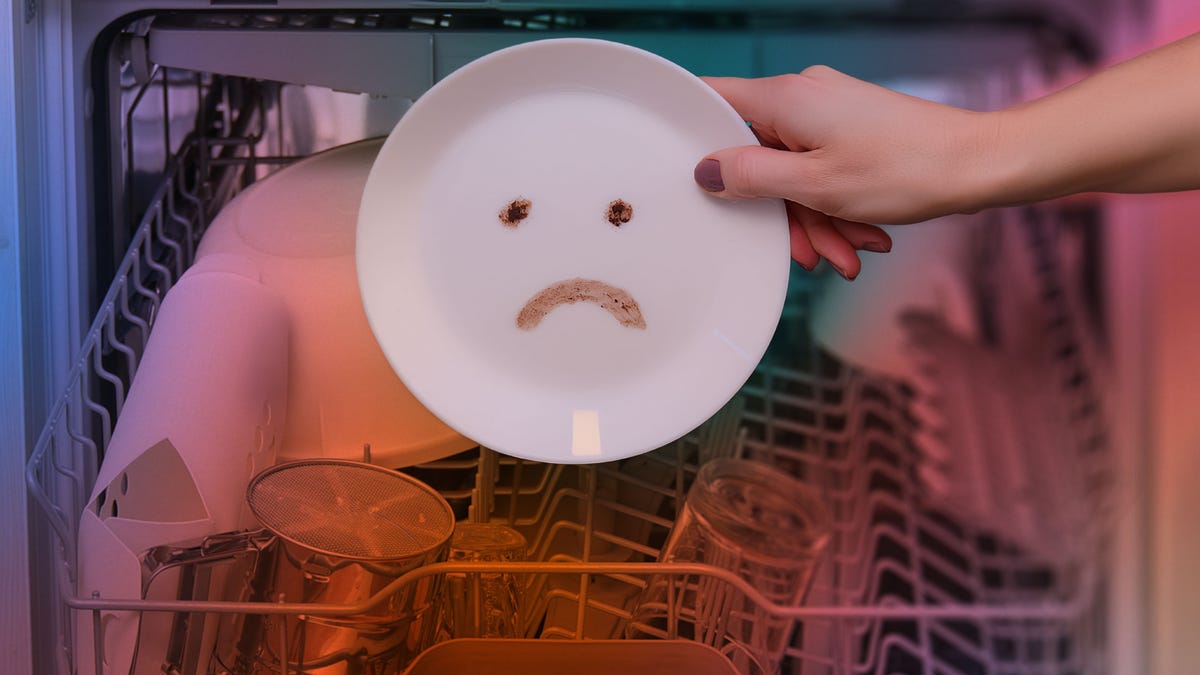
After several days of rain here in Los Angeles, I walked into my apartment’s kitchen to the smell of wet dog. The only problem? I don’t have a dog. I was unable to locate the source until I went to grab a bowl for my breakfast and opened my dishwasher, where the smell was clinging to all my freshly washed dishes.
I assumed the scent had something to do with the rain. After checking Google, I found out that if heavy rain overloads your sewer system, wastewater and gases can back up into your drain lines, causing an unpleasant odor. Hoping the problem would fix itself once the rain stopped, I washed all my dishes by hand and deep-cleaned my dishwasher, but no luck.
The wet dog scent persisted.
Not wanting to unnecessarily call a plumber, I did one final internet deep-dive when I came across a Reddit thread about how leaving eggs on dishes can trigger a chemical reaction in your dishwasher that produces a wet dog smell. I confirmed this with a plumbing expert.
“As egg material breaks down, it releases hydrogen sulfide gas, which has that classic ‘rotten egg’ or sulfur smell,” said Bruce Brookins, a spokesperson for Bacon Plumbing, Heating, Air and Electric. “That odor can also mix with other food residues, moisture and detergent residue to create a musty odor similar to a wet dog smell.”
A lightbulb switched on above my head.
I’d recently (and majorly) failed at making egg bites in a muffin tin, ending up with egg that seemed permanently stuck on the tin. Thinking my dishwasher would take care of it, I threw the muffin tin on the bottom rack and promptly forgot about it. Compounding the problem, the dishwasher couldn’t get all the egg off the first time, so I lazily put the tin in again, which would explain why the scent remained.
How to fix a wet dog dishwasher smell
“The solution I’d try first is to clean out your dishwasher’s filter,” said Brookins. “After reinstalling the filter, run your dishwasher with detergent on an empty cycle.” If the filter isn’t clean after this cycle, repeat the process.
Sure enough, once I removed the eggy muffin tin and cleaned both my dishwasher and its filter, the scent vanished. And I learned that, as Brookins put it, the “dishwasher isn’t really designed to handle a whole lot of solid food waste.”
I will be scraping food off all my dishes from now on — even if it requires extra elbow grease.
Additional deodorizing advice
Some dishwasher manufacturers, such as Whirlpool and KitchenAid, also recommend removing odors by placing a bowl of white vinegar on the bottom rack of your dishwasher — not in the rinse aid compartment. Just make sure this aligns with what your specific manufacturer recommends in the dishwasher’s manual.
You don’t want to trade a foul odor in your dishwasher for one in your sink, so Brookins added that you should flush your garbage disposal with running water after putting any food waste into it. Once a week, run the disposal with dish soap and hot water.
Lesson learned
While this was a valuable science lesson on chemical reactions involving eggs, it also highlighted the importance of realistic expectations for appliances. While they can do a lot for us, they can’t do it all. Knowing where to draw that line is an important part of ensuring our home devices work as intended and have a long life, one that isn’t interrupted by something as seemingly innocent as an egg-coated muffin tin.
Read the full article here