







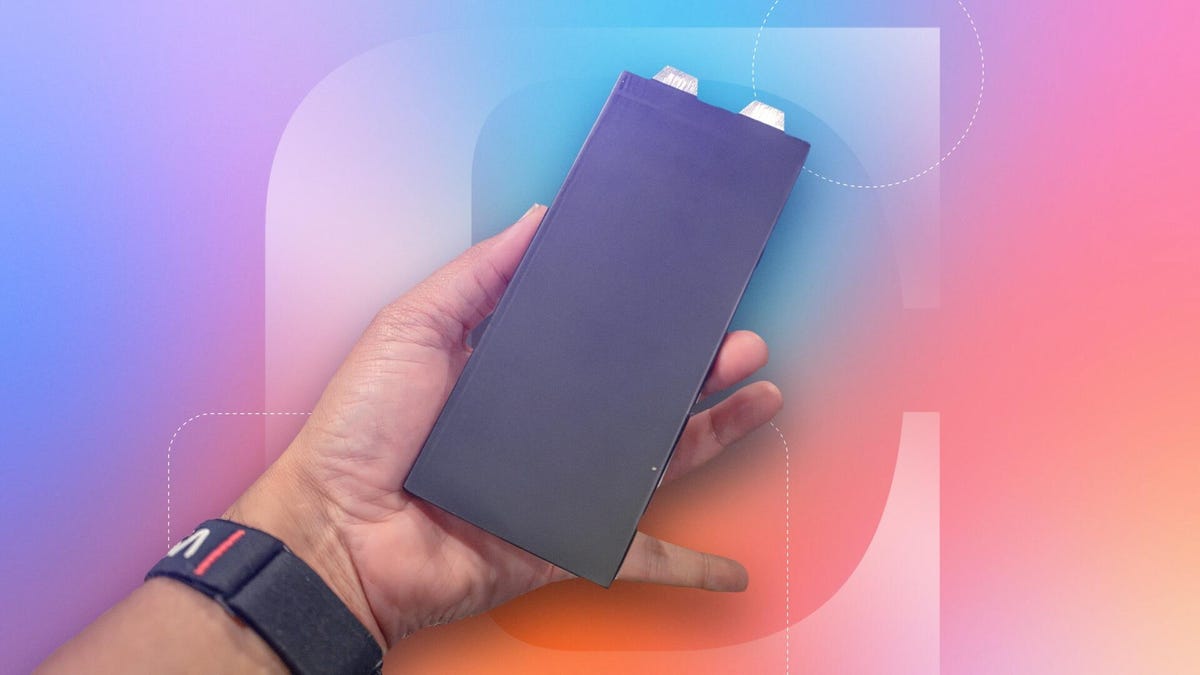
In January, there was a lot of hype around an announcement from Finnish company Donut Lab: It claimed to have created the world’s first production-ready solid-state battery.
The Donut battery, marketed as the energy source behind the Verge TS Pro motorcycle, was allegedly a “pioneer” in bringing this new battery technology to a production-ready electric vehicle. During CES 2026, Donut Lab’s phone-size powerhouse was even a finalist for CNET’s Best Transportation category, where we noted that the cell promised “huge improvements in energy density, charging speed and safety.”
But it now appears to be a wolf in sheep’s clothing. The battery is allegedly using existing lithium-ion technology, not sodium-ion solid-state chemistry, according to new reports following an investigation from battery researcher Ryan Inis Hughes, known for his YouTube channel Ziroth.
Hughes, along with a team of over 20 specialists, presented electrochemical evidence, including voltage curves and cell expansion data, that conclusively identifies the battery as lithium-ion. In his YouTube video, Hughes interviews an executive in the battery industry who had dealings with companies developing the technology Donut Lab was promising. Hughes also consulted with battery experts on the company’s claims, such as the Donut Battery’s purported 400 watt-hours-per-kilogram energy density — a “holy grail” milestone for batteries — and its 100,000-cycle life.
A representative for Donut Lab did not immediately return a request for comment.
Skepticism and investigation
The new research from Hughes confirms doubts raised by media outlets covering the EV and battery industries, including Electrek, which posted an article in mid-April about a whistleblower who came forward to say Donut Lab’s product was a fraud. Electrek also interviewed Donut Lab CEO Marko Lehtimäki in January, noting in a headline that the company’s leader would either be proven world-changing or a fool within months.
Fred Lambert, Electrek’s editor-in-chief, now notes that the site “called this one early,” adding that the investigation reveals clear-cut lies around manufacturing and shipping the battery. According to Lambert, Donut Lab also duped investors by inflating its valuation. “The company raised approximately $25 million from over 1,300 mostly small investors based on claims that now appear to be false,” he wrote.
A closer look at Donut Lab is drawing comparisons to the Theranos saga, when founder Elizabeth Holmes falsified information about her blood-testing startup. She was eventually sentenced to 11 years in prison.
Outlets like Electrek have come out in support of the Hughes investigation. The Verge and AutoEvolution have also posted about the investigation’s findings.
Solid-state vs. lithium-ion
A solid-state battery, as promised by Donut Lab, would solve many of the problems associated with lithium-ion batteries. For one, it wouldn’t be subject to overheating and fire risks because it wouldn’t use flammable materials. With denser technology, the hope was that a solid-state battery platform could usher in faster charging speeds, longer battery life and increased range for electric vehicles.
Companies including Toyota are actively working on the technology, but no major manufacturer has pronounced anything production-ready the way Donut Lab did.
Read the full article here


