






Oil isn’t a requisite for cooking but some foods benefit from a spritz or drizzle. The beauty of air fryer cooking is how much less oil you need to achieve a fried-like crispiness. Most dietitians and health professionals recommend limiting oil in your diet — oily foods tend to sit more heavily, though using healthy varieties in moderation is nothing to stress about.
Some air-fried foods benefit from a light coating, particularly those cooked without a sauce or marinade (cauliflower, I’m talking to you). Whether you’re making grilled cheese, salmon or a favorite vegetable dish, a thin layer of oil can mean the difference between a perfectly cooked result and something dry and disappointing.
According to a pro chef I chatted with, using the wrong cooking oil is a common air fryer mistake. Oil can be pricey, especially good olive oil, which is one reason you should keep it far from your air fryer’s basket. Another reason? It’s simply not the best oil for high-heat cooking.
“The convenience air fryers provide is the ability to cook with the same speed and efficiency as a deep fryer without having to use as much oil,” says John Marchetti, executive chef of Carcara in Phoenix. “It’s for anything that you want that deep-fried crispness but without the extra fat.”
With Marchetti as our guide, we’ve compiled everything you need to know about air fryer oil, including which cooking oils are best (and worst) to use.
How to use oil in an air fryer
When using oil with your air fryer, your choice should have less to do with the type and more to do with the volume. “Any oil that you put too much of, the heat will distribute unevenly, and the food will burn,” Marchetti warns.
With too little oil, food might not crisp up and will remain soggy, especially when battered. “If I were to batter an item, I would freeze it, lightly season it with oil, salt and pepper, and then cook a small amount at a time to prevent [the ingredients from] sticking and cooling the air fryer down,” he says.
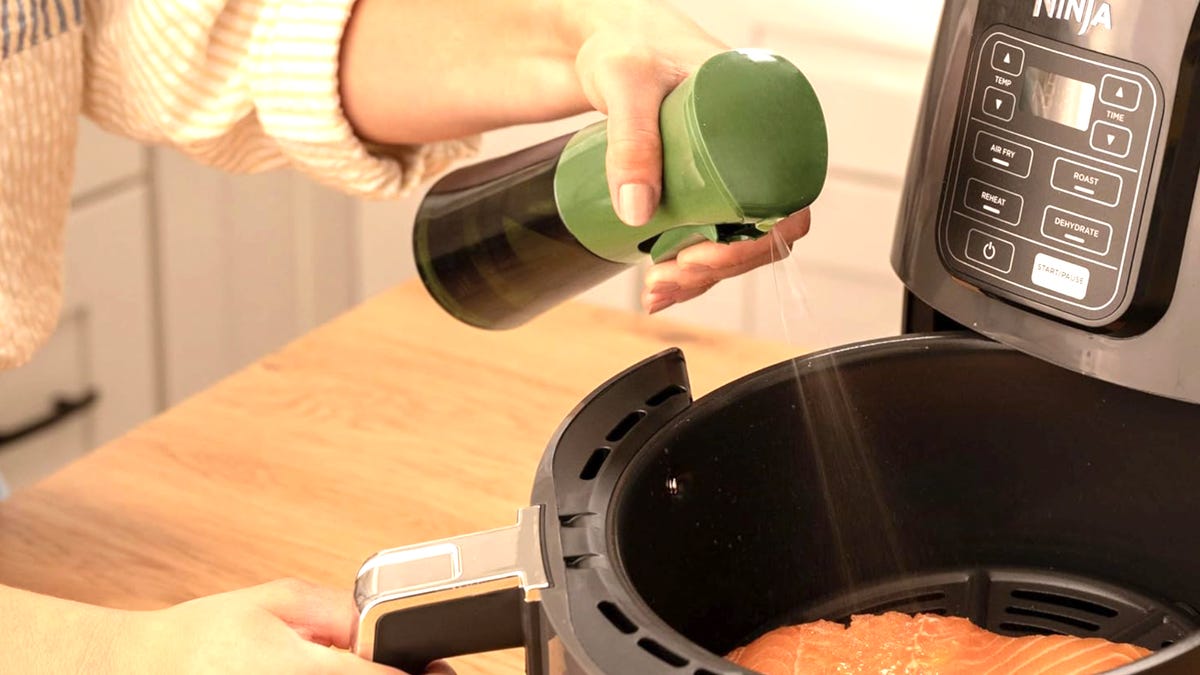
While some chefs we’ve spoken to rail against oil sprayers, I find the affordable device helpful for coating food evenly before cooking in the air fryer.
Other air frying tips to take into consideration:
- Don’t overcrowd the basket: If pieces of food are touching, heat will not distribute evenly, and ingredients will stick together.
- Choose the right temperature: Cooking times and temperatures in air fryers are precise and typically don’t match those in a standard oven. Be sure to research both of these settings in advance.
- Flip the ingredients midway: This ensures both sides achieve that crave-worthy crunch.
- Ensure ingredients are mostly dry: Again, air fryer items that are too wet with oil will yield soggy, burnt or unappetizing outcomes.
Best oil to use in an air fryer
Oils with a high smoke point tend to perform best, as they can withstand higher temperatures without burning, smoking or igniting the house. Because air fryers cook food at high heat for a short period, it’s essential to find an oil that retains its flavor integrity and ability to infuse moisture while also producing light, crispy results for proteins and produce.
Three of the most common oils for air fryers are avocado oil, grapeseed oil and extra-light olive oil (OK, not all olive oil is a no-no).
Marchetti, however, is an even bigger fan of peanut oil, particularly for its depth of flavor, affordability and potential health benefits. “I believe the best oil for frying is peanut oil. It has a high smoke point and is healthier than more common frying oils. If unable to use peanut oil, avocado oil provides similar benefits but can get pricey,” he says.
If flavor is of the utmost priority, canola and sunflower oils also have distinct tastes that pair well with a range of dishes, from broccoli to chicken.
Worst oil to use in an air fryer
Unrefined oils, such as extra-virgin olive oil and some coconut oils, have lower smoke points and may not produce the coveted crispiness in an air fryer. It’s also advisable to avoid melted butter, as it has a low smoke point and burns easily.
Aerosol cooking sprays, such as Pam, sound good in theory for an even coating, but many contain lecithin (a lubricant that prevents food from sticking) and other additives that can damage your air fryer’s interior and degrade the quality of nonstick trays. Lecithin has also been proven to cause gastrointestinal distress.
Lastly, while many Asian delicacies, such as spring rolls and crab rangoons, taste fantastic when cooked in an air fryer, options like toasted sesame oil make better finishers or additions to dips and dressings. They lose their essence when exposed to higher temperatures, rendering them bland and practically useless.
When in doubt, experiment
Air fryers allow even the most novice home cooks to experiment (safely, of course) with different oils until they find a winner. Take something neutral like potato slices and air fry them with a range of oils to determine which works for your go-to recipes. Keep in mind that a little goes a long way, which is entirely the purpose of what will inevitably be your new favorite investment.
Read the full article here


