







Ripened bananas, an innocent bag of apples or a few ounces of last night’s margaritas left out on the counter. Nearly any food with residual sugar can cause a swarm of fruit flies to descend on your kitchen, ending up in places you really don’t want them. It feels like they appear out of nowhere — and in a way, they do.
But there’s science behind the invasion, and you don’t have to just live with it. We went straight to an entomologist to get an expert-backed strategy for getting rid of them for good — not just shooing them away until tomorrow.
Here’s the game plan.
What’s the cause of fruit fly infestations?
The common name that entomologists give fruit flies is “vinegar flies.” That’s because they’re naturally attracted to fermented liquid, and when fruit rots, it also ferments.
But fruit flies don’t thrive only on rotten fruit or vinegar. They also love sugary substances like soda, wine and beer, and you can find them at the bottom of your trash bin or any wet place with a substantial food source.
“Substantial food source” may mean something different to you than to the small but mighty fruit fly, said Jody Green, an entomologist at the University of Nebraska-Lincoln. “It may not be the food you want to eat, but fruit flies are so tiny it only takes a tiny microhabitat,” — like the residual soda in a can in your recycling bin or leftover bits and crumbs in a takeout container in your garbage, Green explained. Those are prime spots for fruit flies to breed. Once the weather warms, it takes less time for fruit fly eggs to turn into babies.
Read more: Keep Bugs Out of Your Kitchen With These Common Houseplants
How to prevent fruit fly infestation
Cleaning is the key to preventing fruit flies from taking over your kitchen. Keeping your place as dry and free of food as possible prevents pests from continuing their life cycle.
Throw away garbage and take out recycling frequently. Clean out the bottom of bins when liquid accumulates, wipe down counters after you’re finished cooking and keep your sink and garbage disposal free of old food, empty of dishes and as dry as possible.
Read more: This Magic Kitchen Bin Turns Chicken Bones and Food Scraps Into Dirt Overnight
Storing fruits and vegetables in the fridge rather than on the counter will also make it harder for fruit flies to find them. And because they’re attracted to rotting fruit, you should carefully pick your produce at the store to make sure you aren’t bringing any rotten or bruised pieces home, Green said.
It’s especially important to store foods that ferment quickly. Fruit flies thrive on the rot produced by cabbages, strawberries, bananas and other fruits and vegetables that can often break down before you notice them aging out of edibility. Sugary substances should also be stowed away, cups should be lidded or washed out and trash bags should be regularly switched out to prevent fruit fly infestations.
She also added that you should recycle or compost cardboard boxes that hold produce as soon as possible because fruit flies could be breeding in them. Any place that catches water or is moist, like a wet kitchen rag or the rug beside the sink, could become a breeding ground for fruit flies.
Try vinegar and dish soap to slow down an infestation
Apart from consulting our experts, we also did some digging on the r/CleaningTips subreddit to see what other people experience. Some users found their issue wasn’t fruit flies but fungus gnats. It’s worth confirming the infestation by identifying the insect. Many users also noted that an apple cider vinegar and dish soap trap caught a lot of the flies and helped fight their infestations.
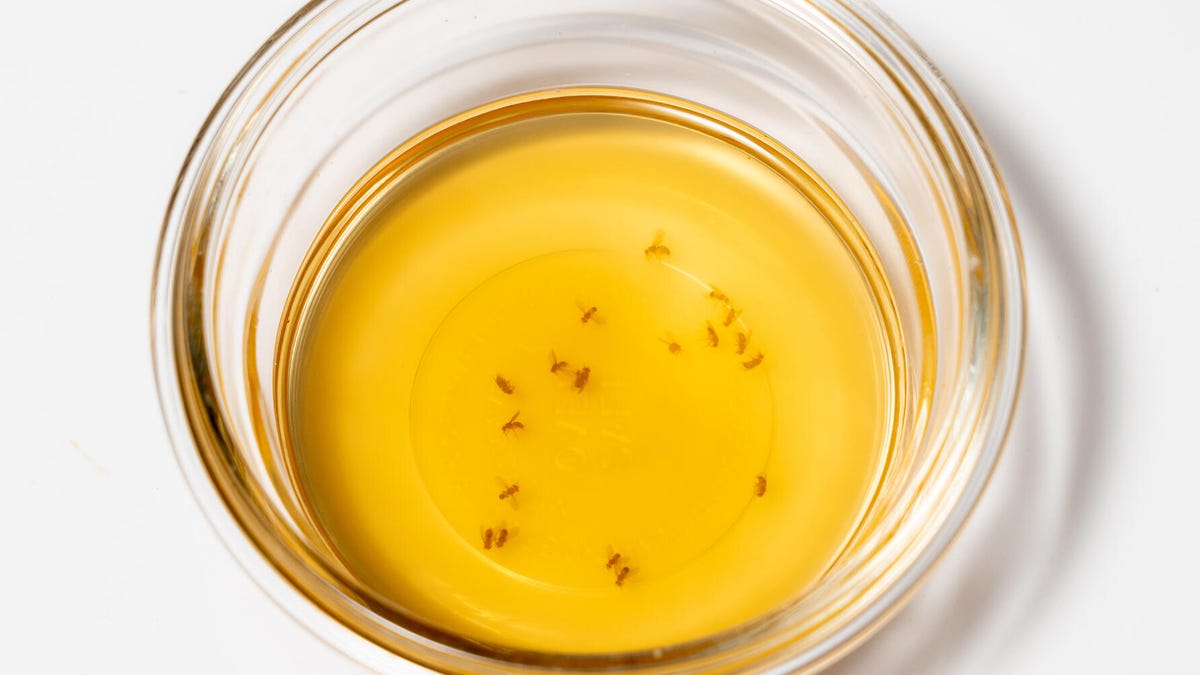
To make a vinegar-and-soap fruit fly trap, mix a few ounces of apple cider vinegar with a few drops of dish soap in a small dish, then cover with plastic wrap. Poke holes in the wrap so the fruit flies can get in but not out, and place the trap near your fruit fly infestation.
What do fruit flies look like?
Fruit flies are about an eighth of an inch long, have red eyes (though some species have darker eyes) and are light brown with dark rings around their abdomen. They also have two wings (many insects have four).
For more home tips, here are the best air purifiers for clean air and the best cordless vacuums.
Your Kitchen Is Full of Clutter. Here Are 27 Things to Throw Out Now
See all photos
Fruit fly FAQs
Can I get fruit flies without leaving out fruit?
Yes, you can get fruit flies even if you don’t leave fruits and vegetables outside of the fridge. Though fruit flies are attracted to fermented fruits and vegetables, they also love sugary substances. The flies will similarly swarm wine, beer, soda and other sugary liquids if you leave cups of them around the house.
How clean do I need to be to avoid a fruit fly infestation?
Fruit flies are able to subsist off very small amounts of food or drink — the scraps of a takeout box or the soda left at the bottom of a can, for instance. You’ll want to make sure you wash out any container before placing it in the trash can or recycling bin, especially in warmer months when fruit flies are breeding at a rapid pace.
Can fruit flies make you sick?
Although fruit flies don’t carry any diseases, they do carry bacteria on their bodies that are transmitted to the produce they touch. This can be transmitted to people if they eat food touched by fruit flies. The best way to stay safe is to throw out food touched by the flies to dispose of any potential bacteria. If you feel you’ve eaten fruit that may have been affected by a fruit fly, you should reach out to your doctor.
Read the full article here


