


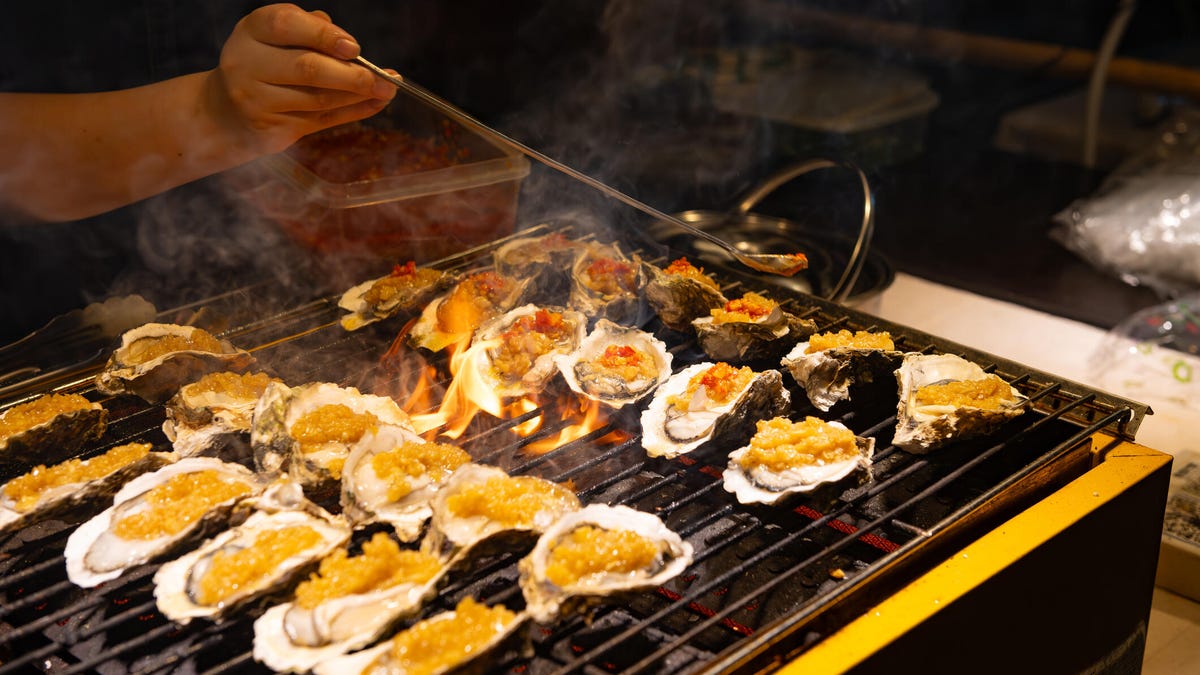
The New York Knicks aren’t the only thing on fire this summer. Grills are wheeled out, uncovered and ready to heat up for outdoor barbecues and soirees. But beyond the expected fare like burgers, hot dogs, steaks and ribs, there are throngs of other, more surprising ingredients that deserve the open-flame treatment.
“Today, we understand much better that grilling is not just a technique for cooking meat. Fire has the ability to transform very different ingredients through smoke, caramelization, and light dehydration,” says executive chef Fran Zafra of Don Carlos Marbella, who specializes in grilled Mediterranean cuisine. “That creates nuances that are difficult to achieve with other techniques: depth, toasted notes, contrast between exterior and interior, and a far more expressive sense of the product itself.”
We reached out to over a dozen top chefs from around the world to ask about their favorite, unexpected foods to rake over the coals — literally. These were the five that made the cut.
Fruit
Fruits, particularly stone varieties, were unsurprisingly the most recommended ingredient by our pool of culinary experts. The heat caramelizes natural sugars, resulting in a delectably smoky-sweet crunch that can only be achieved over charcoal, wood, or a blaze.
Rishi Manoj Kumar, owner and culinary director of Chicago’s Mirra and newly opened Mariela, is a fan of peaches and plums, as well as “sturdier” options like pineapple and watermelon.
“Cut the fruit into thick pieces, oil it lightly, and grill over medium-high heat for a few minutes per side until you get char marks and the flesh softens slightly,” he advises. “Serve it sweet or savory, like with yogurt, chili, herbs, cheese, or a squeeze of citrus.”
Chef David Vieira of Gandaia Club, the appropriately nicknamed “Decadent Restaurant” in Lisbon, takes full advantage of strawberries during their peak harvesting months of June and July. He suggests removing the stems, sprinkling with olive oil and flaked salt, and placing the heat-shaped morsels over embers (with pinecones for added smoke).
“You are looking for them to keep their shape. While some get smoky, others get grilled, giving different textures and flavors,” he explains. “Serve them over some whipped cream, finish with lime zest and a splash of olive oil, and crack some black pepper on the top.”
Many backyard cooks also forget that bright and colorful peppers are technically fruits. Despite having significantly lower sugar content than most produce, they still fire up and crisp nicely, and are especially delicious when paired with sweeter counterparts.
“For me, summertime means stone fruit and peppers,” says Executive Chef Roy Ellamar of AYA Rooftop Restaurant in Sonoma County. “I love marinating peaches and throwing them on the grill, along with some sweet and spicy chilies to add to a refreshing salad that toggles the line between hot, cold, sweet, and spicy.”
Cheese
Skillet-based halloumi is no longer a dish reserved exclusively for Greek restaurants. It’s a cheese that can easily be thrown on any grill and withstand the inferno.
“The moment the cheese touches the fire, it starts to caramelize and takes on this beautiful golden crust while staying soft and creamy inside,” shares Alessandro Pizza, corporate executive chef at Nikki Beach Hospitality Group. “It works beautifully on its own, over a salad, or next to grilled fish or meat. I like to serve it very simply with sweet cherry tomatoes, pomegranate, wild arugula, good olive oil and a touch of balsamic… and voilà: You have something fresh, salty, smoky, and perfect for summer.”
Jeff Tunks, culinary director at Palm Beach-based P Hospitality, also shares a love for the semi-firm, unripened cheese that actually originated in Cyprus.
“It has a high melting point, so instead of falling apart, it gets a beautiful golden crust but still stays soft and chewy inside,” he says. “It [also] takes on a subtle smokiness from the grill and pairs perfectly with summer vegetables, watermelon, herbs or even grilled bread. At Ember & Vine, we’ll be getting a beautiful halloumi cheese and pairing it with grilled heirloom baby carrots, hot honey and za’atar.”
Read more: The Best Grilled Cheese You’ll Ever Make Doesn’t Happen in a Frying Pan
Though halloumi never disappoints, Josue Tello, corporate executive chef at the Sumaq Machu Picchu Hotel, implores amateur grillmasters to explore other varieties of cheese.
“Andean cheese, especially fresh high-altitude cheeses like queso paria from Peru, develops a crispy exterior while maintaining a soft, creamy center,” he shares. “The key is controlling the heat. Ingredients like cheese should be grilled over medium-high heat for a short period of time to prevent them from breaking apart. Lightly oiling the surface and using a clean grill helps achieve caramelization and smoky flavor without sticking.”
Leafy greens and starchy vegetables
Grilled romaine can add an extra crunch and intensity that elevate any standard salad, especially a classic Caesar.
“I love working with romaine lettuce or little gem hearts over the grill,” raves Zafra, who also serves a grilled avocado salad at Don Carlos Marbella’s Sol y Sambra restaurant. “People rarely expect something so delicate to respond so beautifully to direct fire, yet the result has incredible character.”
The key, he adds, is to “intervene as little as possible” and “respect” the product. “The grill works best when it enhances the original flavor rather than masking it.”
James Beard-nominated Chef Bailey Sullivan of Chicago’s Monteverde Restaurant and Pastificio agrees. “A quick kiss on the grill, dressed with olive oil and sea salt, develops a beautiful char while still maintaining the lettuce’s natural crunch and juiciness,” she says. She’s also a fan of combining the hearty yet delicate veg with the aforementioned cheese, particularly Italy’s caciocavallo variety.
“If you really want to turn this grill-out into a full-blown feast, pair those charred lettuces with seasoned lamb chops, salt-roasted potatoes and add that gooey, melty caciocavallo. You’ve [then] got something really special to impress your guests,” she gushes, adding that grilled bruschetta can also help to soak up all the juices.
Those who are green-averse can rely on the good ol’ potato for a flavorful charge via the grill. Chef Partner Thai Dang of Chicago’s Crying Tiger says he loves grilling sweet and regular potatoes before topping them with garlic-herb butter and crushed dried chili flakes.
“That’s my thing,” he exclaims. “But you don’t want to grease the slices of potatoes because the excess oil will drip down and make the flames flare up — that’s when grilled items smell like gas. The black char left behind after a flare-up is entirely elemental carbon.”
Instead, soak a paper towel in any cooking oil and grease the grill grates to prevent the starch from sticking.
Shellfish
Nothing screams summer like fresh seafood, yet many amateur cooks may be intimidated by the idea of throwing fish, crustaceans, and shrimp on the barbie.
Chef Dale Talde of Tigress in Naples, Florida, stresses that clams can easily be thrown on the grill for an indulgent feast.
“I put cleaned, rinsed clams directly onto a hot grill and cook them until they open. Then I transfer them to a bowl with melted garlic-chili butter, plenty of citrus juice and zest and lots of fresh herbs like parsley, cilantro and basil,” he explains. “There’s nothing better.”
Out-of-the-box proteins
Those looking to be even more adventurous this summer may consider less common protein sources. Pork belly, for example, may be part of many modern breakfast menus, served in egg hashes, but it lends itself well to the grill.
“While many people limit pork belly to breakfast bacon or sophisticated restaurant appetizers, it is actually the ultimate meat for a summer live-fire grill,” shares Executive Chef Rakmin Lee of The Benjamin Royal Sonesta New York. “By using thick-cut pork belly and glazing it with gochujang (Korean chili paste), you get an incredible contrast of crispy, charred fat and deeply savory flavor that beats any standard pork chop.”
Chef David Acosta of Portuguese-inspired ADEGA in San Jose, California, takes it one step further by recommending both sardines and frog legs.
“For sardines, it’s very simple: Just add coarse salt and grill. Frog legs can be marinated overnight in white wine, a little lemon juice, thyme, bay leaf, garlic, and salt, and then they’re ready to grill,” he notes.
If you’re looking for a healthier meat that often gets a bad rap, try chicken gizzards, at least according to Chef Nuno Miguel of the Cénica Porto Hotel.
“Besides being tasty, they are a great source of protein, zinc, selenium, and natural collagen, which is important for healthy skin, joints, and muscles,” he says, adding that they require a slow cook in olive oil, garlic, onion and white wine to tenderize before being skewered and charred.
Read more: Best Seafood Delivery Services Available in 2026
No matter the craving, one thing’s for certain: This is the opportunity to think beyond the tried-and-true red meat, chicken and corn, and introduce new flavors that will entertain your guests and, most importantly, your taste buds.
Executive Chef Guillaume Morance of Puerto Vallarta’s Grand Velas Riviera Nayarit wants eaters to consider snook, a white, mild-tasting flaky fish.
“Butterfly the fish and open it flat. Marinate it for about 10 minutes with salt, pepper, and adobo,” he says. Mexican adobo is traditionally made with guajillo chili, garlic, charred onion, vinegar and spices. “Place the fish in a traditional grilling basket known as a zaranda and cook it over the grill until tender and lightly charred.”
Read the full article here