





Fire sprinkler systems sound like a great home add-on in theory, but in practice, significant problems quench any interest. They require large tanks of water that homes often have no room for, significant remodeling that may not always be possible, and when they do detect a fire, dumping lots of water in a home tends to cause irrevocable harm to wood, furniture, drywall, carpets and art.
UK tech company Plumis is bringing a new option to US homes that addresses all those concerns for people who want extra fire safety. The system is called Automist, and we experienced it at The Kitchen & Bath Industry Show. In short, we haven’t seen anything like it before.
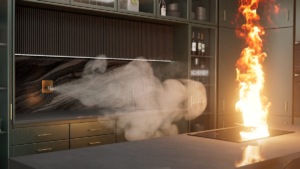
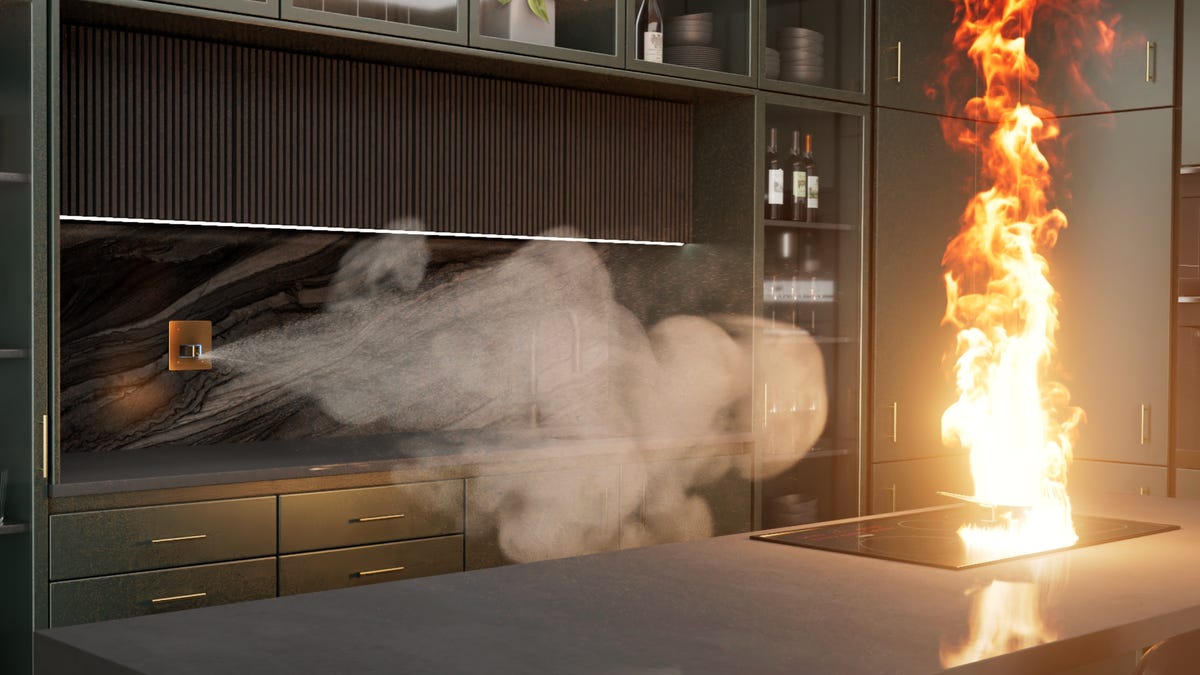
Instead of overhead sprinklers connected to a large tank, Automist uses subtle metal panels, about the size of a large light switch, and customizable with colors and finishes. When a connected smoke detector senses a fire, the panels flip over to reveal a misting nozzle. The mister is connected directly to your existing plumbing, so there’s no need for an extra tank anywhere.
Plumis says Automist uses thermal imaging to pinpoint the fire source for more accurate mist deployment, angling the nozzles to match the threat. The company reports that its research shows Automist can activate up to 14x faster than traditional fire sprinkler systems.
A speedy dry out
For those worried about their belongings getting misted, Plumis says Automist only uses about 10% of the water a standard sprinkler system would. Ideally, that’s enough to clean up with a mop and a dehumidifier without causing permanent damage to materials, while still preventing a fire from spreading.
I’ve seen fire detection systems grow much smarter in recent years, including AI technologies like Arlo’s that can automatically detect a growing flame before smoke detectors do. But this is the first time I’ve seen a system that both taps into home pipes and uses thermal imaging to locate a fire. That’s quite the complete setup for those seriously worried about what a fire could do to their home.
Plumis told us that Automist can work especially well in places like historical homes that need extra protection, or areas that get freezing weather and earthquakes (the misters are kept water-free until activated). However, if you want an Automist system for your home, it’s best to wait until you’re remodeling, as it must be customized to your home. Plumis didn’t mention any pricing, but that could quickly get expensive.
Read the full article here


