







If you cook at home, your kitchen knives are probably among your most-used tools — and most-abused ones. Even the sharpest, priciest blades can lose their edge faster than you’d expect, often because of small crimes you don’t know you’re committing.
Scraping chopped ingredients off the cutting board with the blade’s edge, tossing knives loose into a drawer, over-sharpening or leaving them to air-dry after rinsing — none of these feels like a big deal in the moment. But over time, they add up, dulling your blades prematurely or causing rust and corrosion that no amount of sharpening can fix.
The remedy is simpler than you might think. A few small adjustments to how you use, store and clean your knives can add years to their life — and keep them cutting like new with very little effort.
If you’re in search of a great new knife, we’ve tested out more than 10 options and put together a list of the best chef’s knives for 2026. If you already have a knife that’s your No. 1, find out the most common mistakes people make that can ruin any kitchen knife.
Read more: Want Your Kitchen Knives to Stay Sharp for Longer? This Simple Trick Will Help
8 habits that are killing your kitchen knives
1. Scraping it sideways on a board
Knives are made to cut in only two directions, back and forth and not side to side, so try not to use your good knives in a scraping manner. It may be instinct to move and gather all that chopped food on the board with the blade of the knife, but it will damage the edge over time. If you can’t break the habit completely, at least try to do it gently and without much downward force.
2. Using it on anything other than wood or plastic
There are boards and blocks made from all sorts of materials, but many of them are not knife-friendly. Stone or marble boards and glass surfaces should be reserved for serving food, not preparing it (at least not with a knife), since they will dull your blade faster than almost anything else.
Bamboo and plastic are the softest — and often the cheapest — cutting board materials, and they will be gentle on your blades. Most other types of wood cutting boards, however, have enough give to avoid damaging the blade.
3. Storing it freely in a drawer
This is probably the biggest mistake folks make with their kitchen knives. I’ve seen it more times than I can count, and it hurts every time. Letting your knives clink around in a drawer with other knives and metal tools will dull or chip them over time. It’s understandable not to want a clumsy knife block on the counter, but there are some pretty sleek options these days, like this and this.
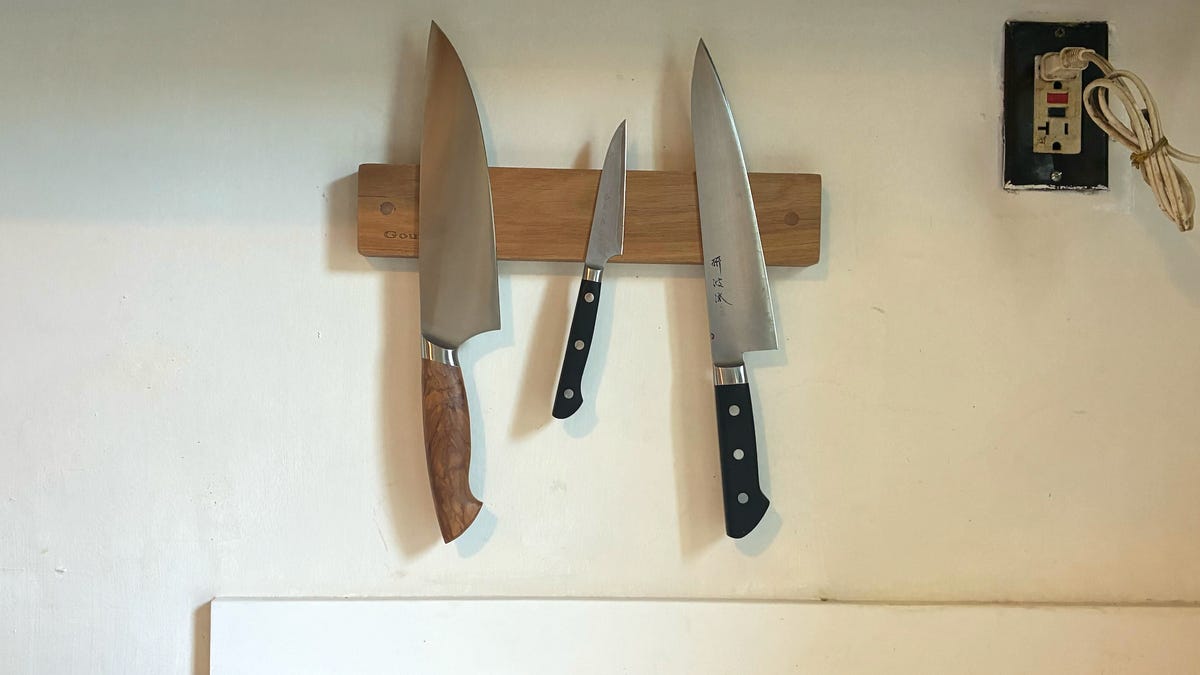
You can also buy in-drawer wooden knife racks or sheath your knives in plastic cases. The coolest option may be to store the knives on one of these magnetic knife racks and show off your shiny blades to dinner guests. Just be gentle when placing knives on the magnet and removing them to avoid scraping the blades.
4. Letting it soak in the sink or putting it in the dishwasher
For several reasons, your knives should never be put in the dishwasher. It’ll likely damage the handles, and the blades should never be exposed to water for that long. Speaking of which, never let a knife sit wet in the sink or anywhere else, for that matter. That means no soaking, ever. When you’ve finished washing it by hand, dry it immediately, or the metal will become susceptible to rust and corrosion.
5. Cutting nonfood items
Good knives may seem like a multipurpose tool, but they should only be used for food prep. Try not to cut any nonfood items, such as plastic, cardboard or other packaging. And don’t even think about using your knife as a screwdriver or lever to pry something stuck open.
6. Using a metal scrubber to clean it
It shouldn’t come as a surprise that using metal or another rough material to clean your knife blade could lead to big problems. Instead, use hot water and a soft sponge or cloth. Your knives should never be so dirty that those aren’t enough to get them clean.
7. Oversharpening the blade
There comes a point at which a knife blade can’t be sharpened anymore, and if you continue to pound it on a steel or whetstone, you’ll only be shaving off the blade itself and shortening the knife’s life span. Here’s a guide to sharpening your kitchen knives.
8. Storing them blade-down in a knife block
While a knife block won’t ruin your blades overnight, the constant scraping against wood will dull or even damage the edges over time. Instead of storing them blade down, flip your knives up before sliding them into the block. Gravity will keep the edges from resting on the wood, reducing the risk of dulling.
Read the full article here


