

Frequently Asked Questions
Are Large Heaters More Powerful Than Small Ones?
Nope! It may seem counterintuitive, but large heaters don’t necessarily heat any better than small ones.
Whatever their physical size, most space heaters in the US and Canada deliver about the same amount of heat. Space heaters top out at 1,500 watts, which is the highest safe operating load for a 15-amp household circuit. And aside from some low-power personal heaters here and there, most space heaters you’ll find on the market are 1,500-watt heaters.
What’s more, electric space heaters are all pretty much 100 percent efficient in converting that electricity to heat. Whether directly or indirectly, nearly all of that energy will eventually become heat.
So if space heaters are the same power and the same efficiency, why are some 1,500-watt heaters advertised for small rooms and some for large rooms? This likely has as much to do with marketing as science. Pretty much every ceramic, electric-coil, or PTC heater has about the same amount of juice and thus the same ability to heat a room … at least eventually.
What differs among heaters is how and where the heat gets distributed and how fast. All other things being equal, the efficacy of a heater is mostly about whether it puts the heat where you want it to go.
What Are the Different Types of Space Heaters?
Basically all electric space heaters do the same thing: They take electricity off the grid, usually 1,500 watts of it if you’re in the United States, and turn that power into heat.
The vast majority of space heaters, including ceramic heaters and PTC heaters, are electric resistance heaters. This means they run an electrical current through something that creates resistance: maybe an electric coil or maybe a specially designed ceramic. This quickly turns electricity into heat.
Most space heaters use a fan to disperse this heat out into the world, where we all live. These forced-air convection heaters tend to be the fastest at quickly raising the temperature of the surrounding air. The air then heats you. And so while this variety heats quickly, it can take quite a bit of electricity to heat up a whole room.
Oil-filled radiators, in contrast, heat up oil that circulates inside the device, which then emits heat to the surrounding room. These tend to heat up slower but offer even and lasting heat and are very quiet. These radiators operate on the same principle as steam radiators in buildings with a boiler room. And just like steam radiators, they can get really, really hot to the touch.
Radiant heaters, such as infrared heaters, operate much like the sun or a campfire: Rather than heat the air, they heat objects or people directly by radiating energy toward them. Infrared devices heat the air only indirectly, via the objects it heats— much the same way the sun’s heat radiates off baking city streets. The glow is immediately palpable as warmth, but you’ll need to be in the path of the radiation to feel it, and the thermometer might not immediately register the warmth you perceive. Infrared heaters tend to be best at making an individual in front of the heater feel a little warmer without using a lot of energy, making them a more common decision in large and lofty spaces or outside on a patio.
Though they deliver heat differently, both infrared and oil-filled heaters are subject to the same wattage limitations, and have about the same efficiency, as electrical resistance heaters.
The same cannot be said for heat pumps, a newer technology that’s expected to provide the next generation of household heat. Heat pumps don’t use energy to create heat. Instead, they move heat energy from one place to another. Accordingly, they require far less energy than other forms of heater. But household systems cost thousands to install. And while more affordable window and portable heat pumps are ramping up, they’re not yet broadly available.
Yes, but also definitely no.
Space heaters are much safer than they used to be. Modern space heaters are heavily regulated, especially regarding exposed heating elements and automatic shut-off switches to prevent overheating. But all heating devices require caution, and so do all devices that pull a lot of energy over long periods.
The vast majority of residential heating fires start with actual fire—specifically in fireplaces and fuel burners. But space heaters accounted for more than a thousand fires in the US each year from 2017 to 2019, according to the US Fire Administration. Though this accounted for just 3 percent of heating fires overall, these led to more than 40 percent of fatalities, in part because portable heaters tend to be placed precisely where people are and because the resulting fires are far more likely to be unconfined.
So treat your space heater with the caution and wild skepticism that it deserves. See WIRED’s Guide to Space Heater Safety for a full rundown about how not to start fires or cause othr hazards. Our guide follows recommendations from federal experts at the the USFA and the Consumer Product Safety Commission (CPSC), as well as the Association of Home Appliance Manufacturers (AHAM).
But for the short version:
Don’t leave a space heater unattended. “Unattended” includes sleeping, y’all! Might we suggest a wonderful down comforter instead? When possible, safety experts also recommend you don’t leave a portable heater running unattended in a room with a baby, nor a person with mobility issues. The risk isn’t just fire but hyperthermia.
Plug your heater directly into the outlet. Don’t use extension cords or power strips with space heaters, lest you build up too much electrical load and risk a fire.
Don’t plug another appliance into the same outlet or circuit as the space heater.
Place a space heater only on the floor, on a level surface. Heat rises. You don’t need to prop up a heater on an unstable chair or table.
Keep your heater at least 3 feet from flammable objects. This includes bedding, drapes, furniture, clothes, papers, books. All of that.
Keep space heaters away from water and dampness, whether in bathrooms or in moist basements prone to dripping or flooding.
Read the manual. Manufacturers have good advice.
How We Tested and What We Tested
When it comes to testing space heaters, there are a few main questions: How safe is it? How loud is it? How quickly and evenly can it heat a room?
During intensive testing of dozens of space heaters, I lived for weeks in a home with the thermostat set to a chilly 65 degrees Fahrenheit.
I tested how well and quickly each device heated a medium-size room (14 by 14 feet), and also how well it heated a small seating area in a larger, open-format space. To test each heater’s thermostat and also measure the evenness of heating, I placed thermometers at three or more locations in each room, including behind the heater.
I tested the loudness of each device with a decibel meter at 3 feet away and verified power usage with a wattmeter. To see whether the heater’s exhaust put out painful levels of heat, I used an infrared thermometer to gauge precise surface temperatures. When in doubt, I put my own fingers on the line.
Finally, I tested safety features and basic durability. I looked at independent safety certifications, of course. But I also rudely knocked over each device to verify how the device’s tip-over protections functioned, if at all, and verified that the device started working again when set back on its feet.
To test overheat protection, I smothered each device with an old sheet to see whether the device shut itself off or whether it adjusted its power output to keep internal temperature low. After the device shut itseld off, I then checked how soon it could turn back on, if it ever did. (Some heaters gave up, in permanent complaint!)
If any device fails the tip-over or overheat tests, we don’t recommend it. If it’s significantly louder than 50 decibels at 3 feet, we don’t recommend it. If the heater breaks during routine operation, we don’t recommend it. Maddening rattles and squeaks are also disqualifying.
We keep on testing our favorites through the cold season and beyond, to see how they hold up over time. And, of course, we continually subject more heaters to our testing regimen to see if other devices can oust our current faves.
More Space Heaters I Recommend
Photograph: Matthew Korfhage
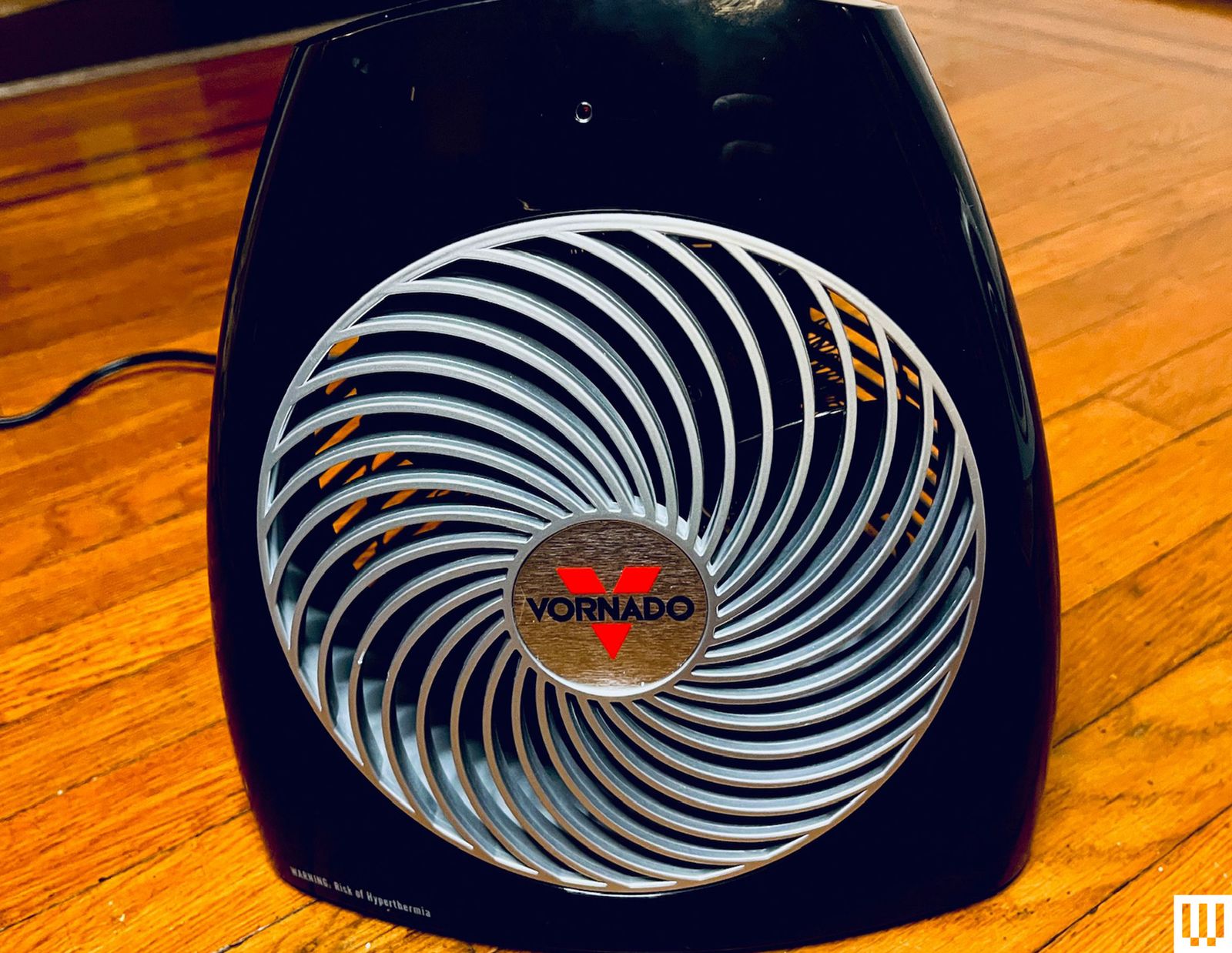
Vornado AVH10 for $100: Vornado has an unholy variety of models that look quite similar but have different levels of loudness and different feature sets. Some are built in America, some in China. In general, the models I’ve liked best are the ones that advertise “vortex action,” a fancy name for spinning a fan into a spiral grate oriented opposite to the action of the fan. This leads to a mostly quiet and nigh-undetectable column of warm air, directed out to the back of the room, where it scatters. The TAVH10, which is basically this model but with a timer and remote, is my current favorite, though if you need neither, you can save $30 and get this.
Photograph: Matthew Korfhage
Vornado MVH+ for $75 and Vornado VH240+ for $70: These two devices are very nearly the same device. And the previous year’s non-digital MVH was my favorite model before getting displaced by a couple newer models of Dreo and Vornado. It remains among the most silent, the most even in its heat, and among the most reasonably priced. This said, the TAV10 got a little quieter and the MVH got a little louder, and the addition of a remote and a timer makes it more attractive. This said, there are reasons to favor an analog device. Because they’re analog, the MVH and VH240 can also be regulated by a temperature-controlled power outlet in order to get the most accurate version of a thermostat.
De’Longhi Slim-Style Portable Panel Heater for $210: This electric panel heater is an interesting hybrid, with dual heat exhausts on each side but also a broad radiant heat panel. This makes for a middle ground between radiators and resistive fan heaters—heating a room much faster than a classic radiator would but still maintaining warm radiant heat over time. This said, it shares a radiator’s main fault, which is that it’s painfully hot to the touch across a large surface—but still issues the same amount of fan noise as a fan heater. Still: It may be your choice if you need to heat up a space quickly and evenly and maintain that heat over time.
Dreo MC706 for $170: New this year, Dreo’s innovative 2-in-1 fan/heater won top marks in our fan guide for its auto-shift positive temperature coefficient (PTC) technology, which moves the heater’s ceramic element aside to allow full fan airflow. Its 1,700 ft/m wind speed is a rarity among tower fans, let alone tower fan/heater combos. It’s not the strongest space heater, but it is sufficient, with five settings, 120-degree oscillation, and tip-over protection. Note that though there is a remote, there are no smart features, and it does not work with Dreo’s app.
Photograph: Matthew Korfhage
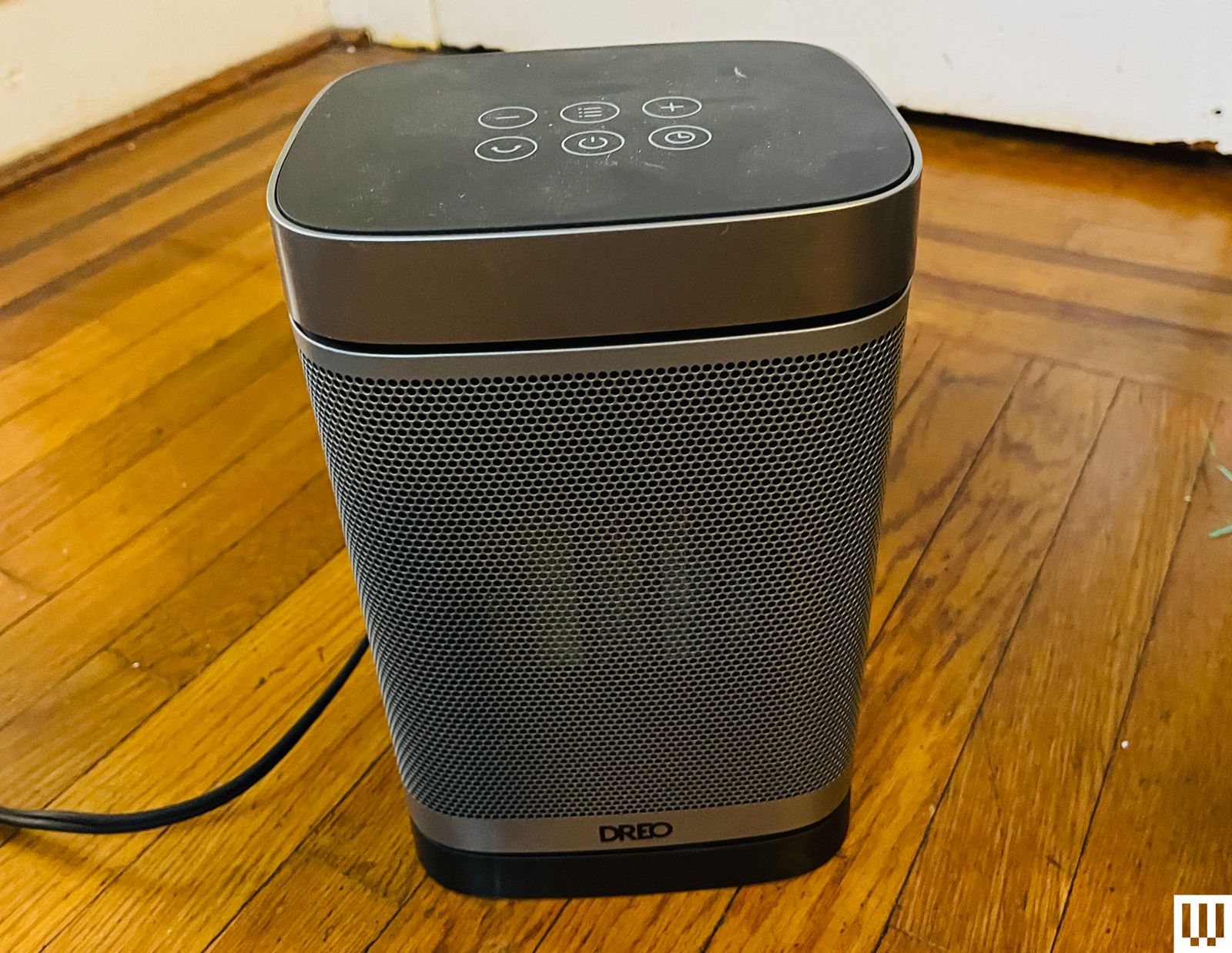
Dreo Bathroom Heater for $60: Like Dreo’s smart wall-mounted model I far prefer, this ceramic heater comes with an ALCI plug for safe use near water. I prefer to keep bathroom heaters away from the floor, but not all bathrooms have mountable wall space. This remains a possible, though not ideal alternative, with a somewhat janky thermostat.
Not Recommended
Pelonis 16-Inch Space Heater for $65 and Pelonis 23-Inch Space Heater for $70: Both of these towers heated up quite quickly. Both were also enormously hot at the surface of their vents, with relatively little shielding from the visible heating elements. The 23-inch was significantly quieter than the 16-inch, however.
Photograph: Matthew Korfhage
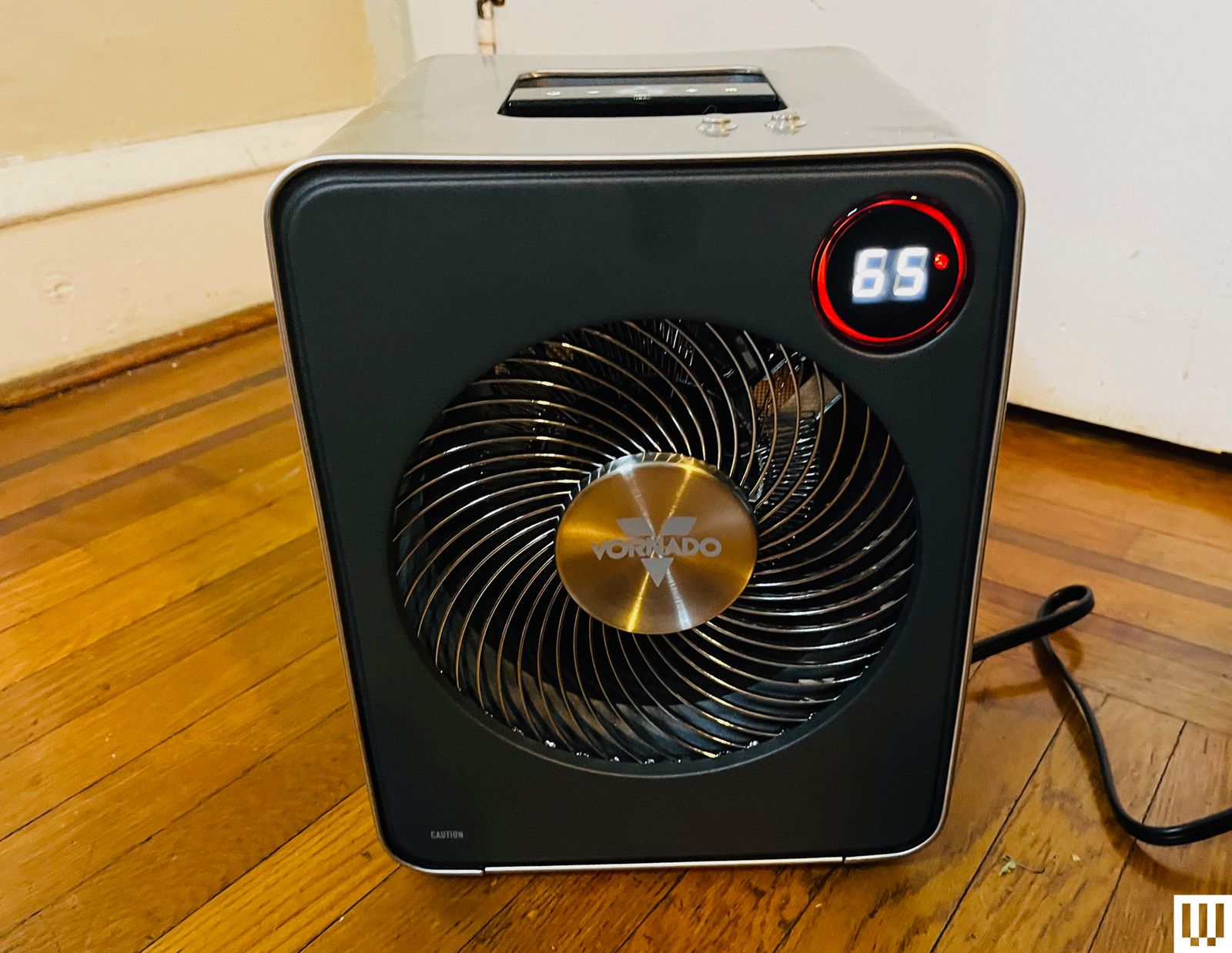
Vornado VMHi600 for $200: This large cube was about as quiet as the AVH10, staying below 60 decibels, but its vent got quite hot—about 130 degrees Fahrenheit. Other Vornado models perform far better at a far lower price.
Photograph: Matthew Korfhage
Vornado Velocity Cube 5S for $100: This cube’s outer housing stayed quite cool, and the fan functionality is welcome. But its surface vent got a little hot, and the fan was a bit on the noisy side compared to other Vornados.
Vornado Velocity 5R Whole Room Heater for $125 and Vornado VHEAT for $160: Our top pick MVH from Vornado is one of the quietest space heaters I’ve tested. These were two of the loudest. The 5R topped 70 decibels. The vintage-looking VHEAT is quite lovely, but it’s also a bit of a noisemaker.
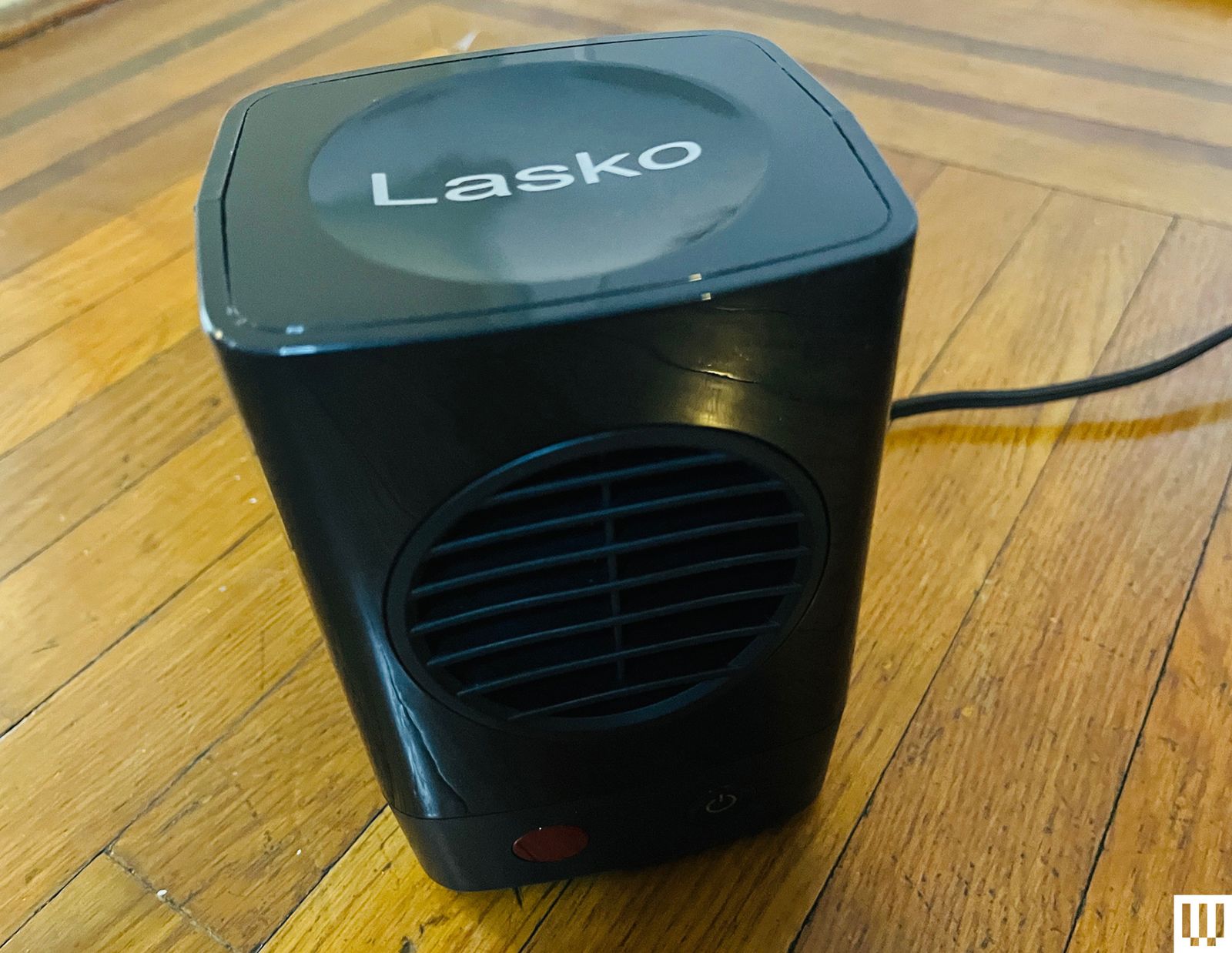
Lasko MyHeat Mini for $40: This little thing looked cute, and I thought it would be a nice desktop or under-table personal heater. But even with its low output at 400 watts, the vent got way too hot to want it anywhere near your laptop or papers.
Photograph: Matthew Korfhage
Lasko 22-inch Oscillating Tower With Remote for $80: This one failed our tip-over test when we knocked it over, blasting heat endlessly into the rug until it overheated and sent a burnt-plastic smell into the air. It did restart hours later, meaning this shutoff was a safety feature. But this tower’s a bit too tall and tippable to risk repeating these events often.
Honeywell 2-Position Heater for $45: This compact, simple, analog heater was a nice enough idea, able to rest vertically or on its side. Lord, it’s loud when its fan is in operation, though.
Honeywell Compact Ceramic Tower for $47: This Honeywell performed well in terms of fast heat and safe surface temperature. Its fan wasn’t too loud either. But the one we received had a maddening squeak each time the tower oscillated fully counterclockwise.
Gone but Not Forgotten
-Reviewer-Photo-SOURCE-Matthew-Korfhage.jpg)
Photograph: Matthew Korfhage
Vornado Sensa Cribside Heater: I loved the idea behind this Vornado Sensa Cribside Heater when I tested it: A space heater with an external temperature sensor, with therefore accurate temperature management (hard to find among space heaters!) But it’s disappeared from Vornado’s website, and has dwindled on retail sites. It’s no longer available on Amazon, but if you see it on sale at another site, I still like it.
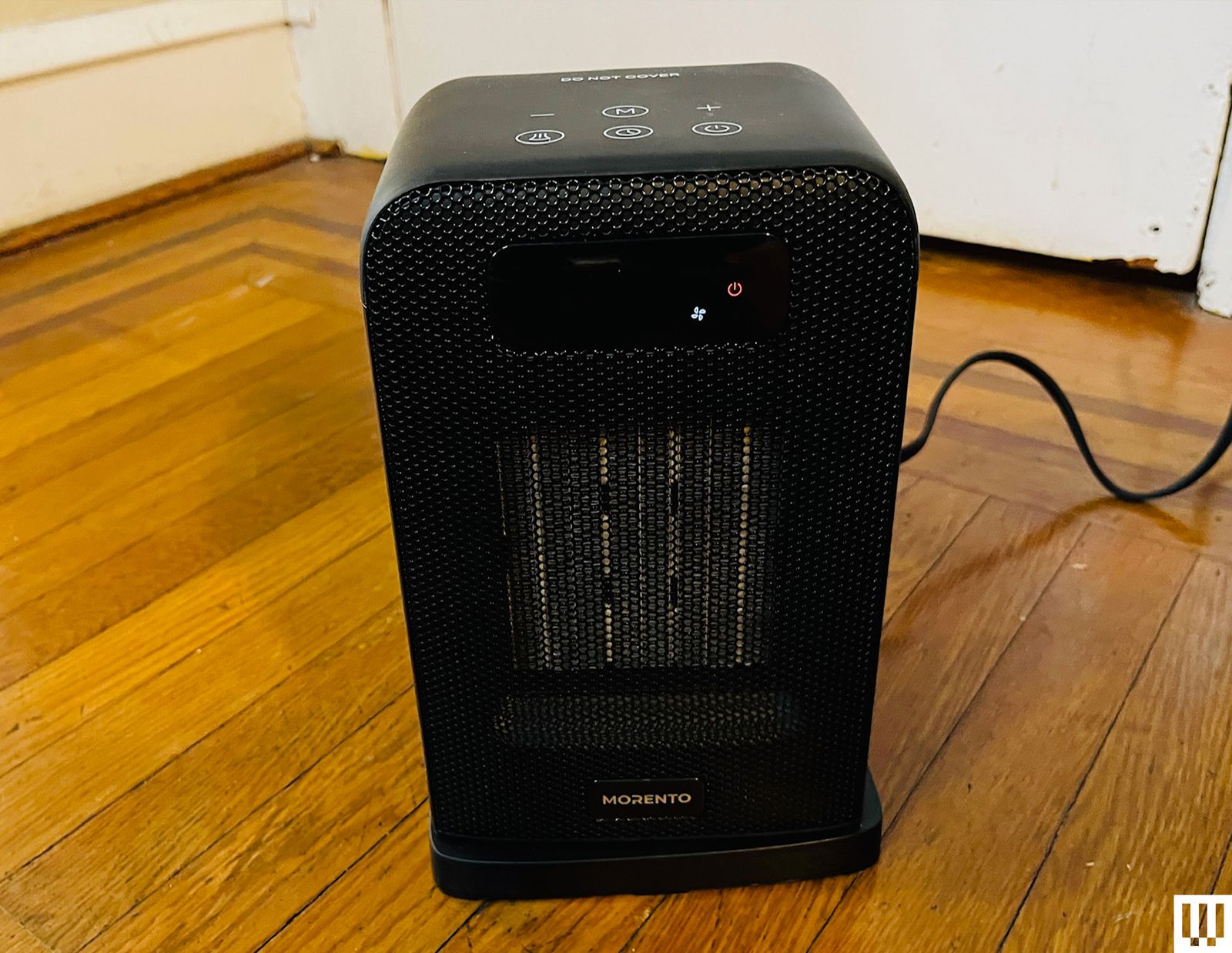
Also tested but discontinued: Morento 26-cm Heater, Morento 40-cm Heater, Dyson HP07, many models of Vornado before the brand’s 2025 refresh.
Power up with unlimited access to WIRED. Get best-in-class reporting that’s too important to ignore. Includes unlimited digital access and exclusive subscriber-only content. Subscribe Today.
Read the full article here