







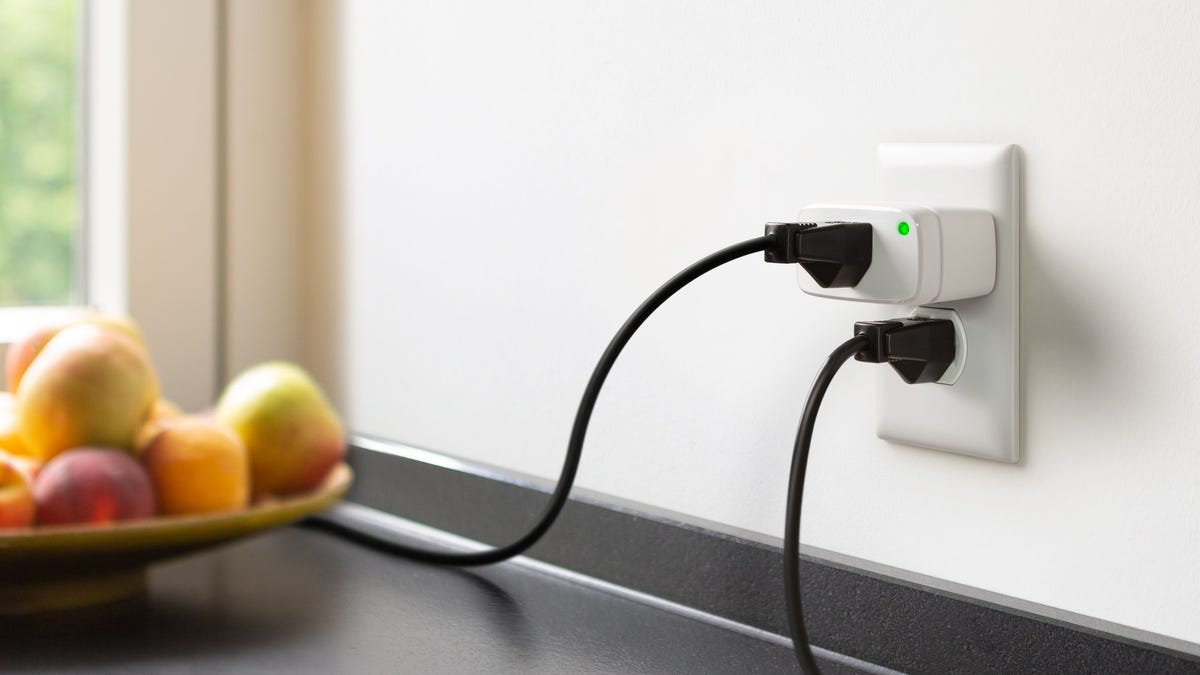
If you’re looking for a low-commitment way to add smarts to your home, consider the electrical outlets. Smart plugs and smart wall outlets add instant connectivity and remote control to anything that’s plugged into one, but there are differences in price, installation and usability that might make one the clear better choice for your burgeoning smart home.
Smart plugs are the simpler option: You plug them directly into an existing outlet, and they add a Wi-Fi or Bluetooth receiver between the wall and whatever you’re powering. No installation required. Smart outlets, on the other hand, replace your existing wall outlet entirely, sit flush with the wall and don’t eat up any outlet space.
There are clear advantages to both. Having used both types in my own home, I’ve outlined the several pros and cons to consider before making a pick.
Smart outlets offer permanence and aesthetics
Consider installing a smart outlet in places where a standard smart plug is vulnerable to unplugging, such as a child’s bedroom or a narrow hallway. Likewise, smart outlets are ideal for locations that require extra security. For example, they’re a no-brainer for smart home systems in short-term rentals, such as Airbnb and Vrbo.
The more permanent nature of smart wall outlets is also beneficial for local smart home protocols that operate without an internet connection, such as Z-Wave, Zigbee and Thread. This type of smart home system remains in place when you sell a house, providing an extra incentive for prospective buyers.
However, smart outlets are an intermediate DIY install project that many people would find too troublesome. You also have to consider that hiring an electrician to do the work will drastically increase the price of smart outlets. Better aesthetics come at a price.
Smart plugs are generally better for most folks
The most significant advantage of a smart plug is its plug-and-play design — literally any power receptacle can host a smart plug with minimal effort. Alongside smart speakers and smart light bulbs, smart plugs are the easiest type of smart home technology to install. From there, you need only connect the smart plugs to your smart home for full functionality.
As a renter, I exclusively use smart plugs because my lease forbids me from doing any electrical work. They form the backbone of my smart home, something I’ve covered extensively in other CNET articles. Roughly half of my smart plugs control a series of grow lights for my houseplants; some manage a DIY ventilation system, while others control accent lighting, and the rest help me track energy usage during product testing.
Although they are best suited for renters like me, smart plugs are equally effective for homeowners. The key is their portability. I can move a smart plug in seconds, while the same task with a smart outlet requires a screwdriver and a trip to the breaker box. If a device needs to switch locations but retain its smart powers, a plug makes that easy, while a full outlet may prevent it.
Choose the best fit for you
Generally, most homeowners will benefit from using a combination of smart plugs and wall outlets rather than relying on a single type. This helps reduce the costs of swapping most outlets for smart ones, while also giving you the flexibility to add other smart plugs as needed. Renters should consider using smart plugs unless their landlord plans to install smart outlets for them.
Smart plugs also have a price advantage over smart outlets. While it’s rare to find reliable smart outlets under $10, most cost $20 or more, like this Kasa outlet ($25). In contrast, you can easily buy smart plug four-packs from mainstream brands and Govee for less than $30 or a single Emporia plug at $12. However, remember that receptacles typically give you two outlets while most smart plugs only convert one, although you can find two-outlet plugs like these Govee options ($25).
For more ideas on what smart home devices can do for you, check out the best smart home devices overall and the smart devices our CNET editors started with.
Read the full article here


