





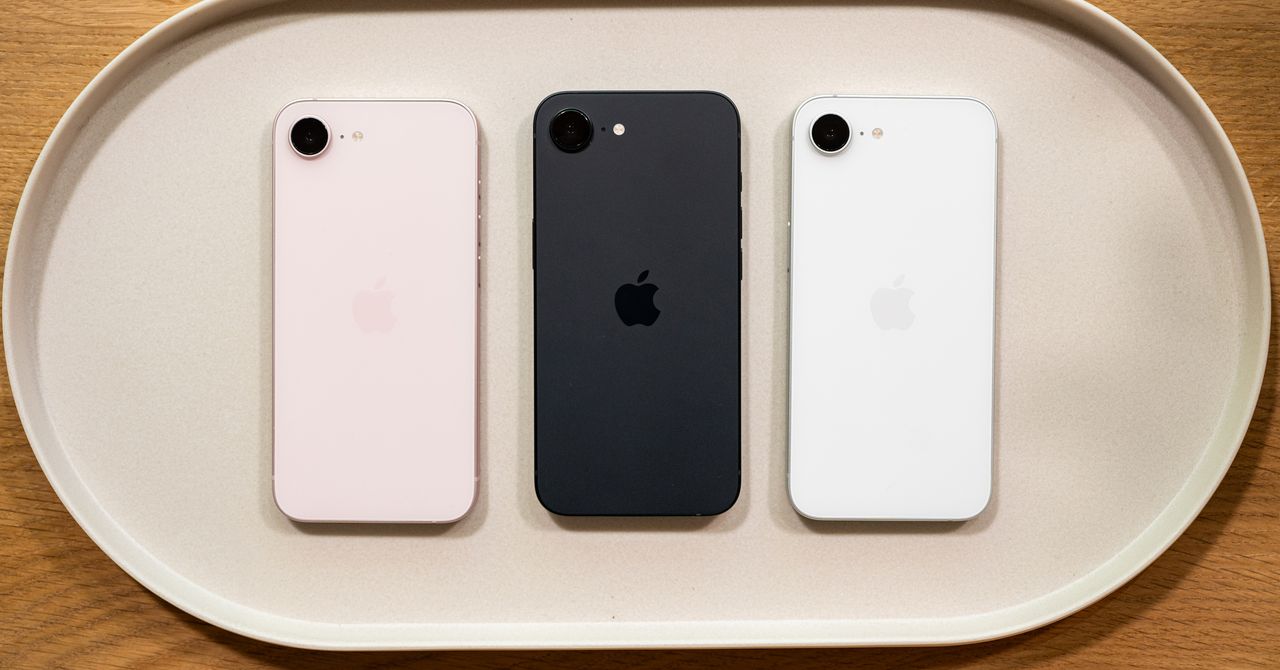
One new perk over the iPhone 16e, driven by the A19 chip, is the ability to turn on or off Portrait blur for photos after you’ve captured them. So, if you wish you snapped a photo in Portrait mode, you can enable it after the fact. Speaking of, Apple’s Portrait photos look more realistic and natural than the results from the Google Pixel 10a, though the Pixel triumphs in low-light scenes.
Low light generally is one area where this iPhone struggles compared to its peers. Not necessarily in sharpness, but when there’s any motion. I tried to snap a picture of my brother’s cat indoors, and Night mode kept kicking in, leaving me with a long-exposure photo of a blurry cat. The Pixel 10a better understands when there’s motion and doesn’t kick in its night mode as often, so my cat photos were impeccably sharp.
Overall, whether it’s day or night, the iPhone 17e sometimes delivers sharper photos than the Pixel 10a, but the color temperature tends to be warmer. The Pixel 10a can sometimes match it in image quality, though contrast is lacking, or the color temperature is a little too cool. Still, I find the Pixel is generally more reliable in low light, and selfies were sharper and better exposed. Video performance fared better for the iPhone—I shot a whole video on the 17e, and while the quality wasn’t as sharp or smooth as what I could get from the iPhone 17 Pro, it was more than adequate.
Don’t get me wrong, you can snap some nice photos with the iPhone 17e. You’ll just run into its limits far more often than you would on an iPhone 17, which has a larger sensor for its primary camera.
The iPhone 17e is still a little overpriced compared to the competition, but I think it’s a perfectly fine choice for anyone who wants to buy a basic iPhone without going through the used market.
Read the full article here


