

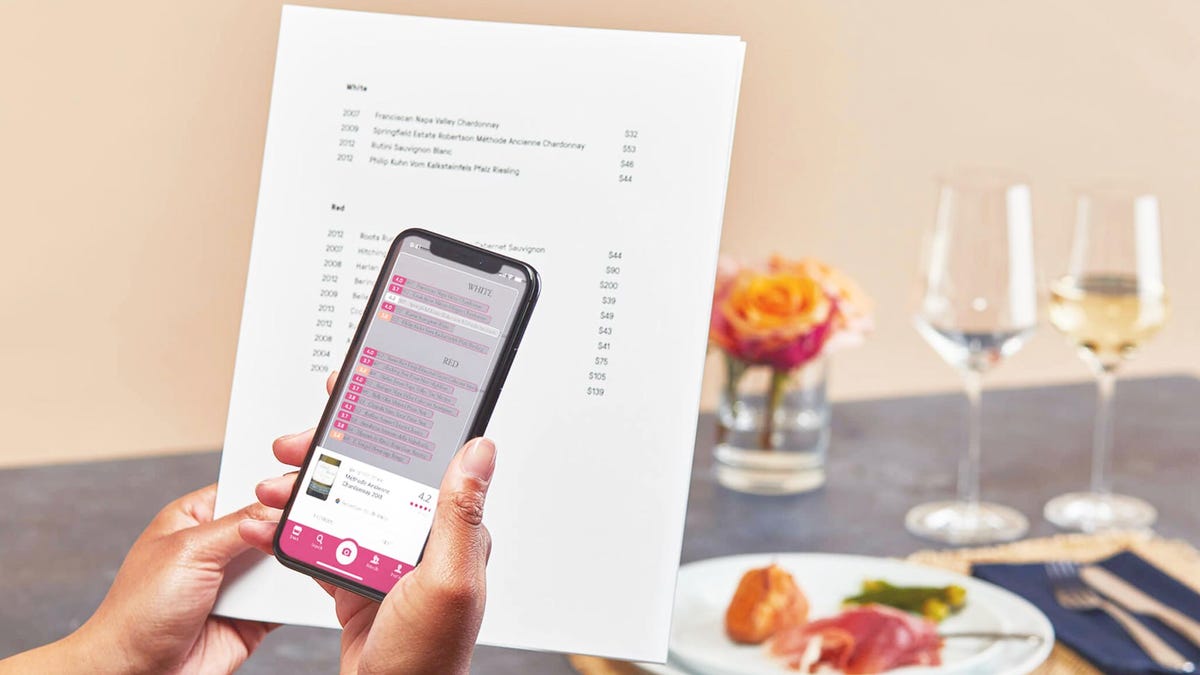
Choosing a bottle of wine at retail — whether you’re browsing a well-curated wine shop or grabbing something off a grocery store shelf — is a low-stakes experience. Ordering one at a fancy restaurant is another matter entirely. With the whole table watching, you’re expected to make a quick decision that satisfies everyone’s tastes and fits the budget.
I spoke with sommelier Baptiste Beaumard of New York’s Michelin-starred Restaurant Daniel about navigating wine orders at fine-dining establishments — including whether using a wine list-scanning app like Vivino or Wine Searcher is considered a faux pas.
“People are often intimidated if it’s the first time they’re speaking with a sommelier,” says Beaumard. While the sommelier job may be about wine sales in its basest interpretation, “It’s more about making the guest comfortable,” he says, and connecting them with the perfect wine, not just the most expensive one.
Beaumard shares his practiced guidance on how to confidently order a great bottle of wine in a restaurant, no matter how much you’re looking to spend.
Let the server or sommelier do their job
The best way to order a great bottle of wine in a restaurant, even on a budget, is to let the sommelier guide you, and be honest about what you’re looking for, and what you want to spend. You don’t need to impress them with what you know or the power of your wallet.
“I will always take the information the guest shares about attributes or styles they like, and choose bottles with various prices, from less expensive to more expensive,” says Beaumard. “You will always have the final say about what you want to spend on a bottle of wine.”
The reputation of a sommelier as a stuffy, sales-driven character who wants to lord their knowledge over you for the purposes of intimidation and talk you into something expensive that suits their taste, not yours, isn’t reflective of reality. Wine experts, yes, but most sommeliers really want to connect you with the wine that is right for you, for your occasion, meal, palate and yes, budget.
State your budget without stating your budget. Here’s how
First and foremost, you have every right to have a budget for wine, regardless of the restaurant’s menu cost and where you’re dining. Whatever your wine budget is, you shouldn’t be afraid to share it with the sommelier, so they can start to tailor their recommendations accordingly.
If you don’t want to share your budget out loud, however, to either keep it from your dining companions or from the imagined judgment of the tables around you, there’s an extremely simple way to do that. When you have the wine list with prices right in front of you? Point.
“When I recommend a bottle, I will show the price discreetly to the person with the wine list by pointing to it, and ask if that’s OK,” says Beaumard. You can do the same to start the conversation with the sommelier by pointing to a price on the wine list and letting them know you’re looking for something in that price range.
Ask about the best budget-friendly wines
The most famous wine regions in any country — Champagne, Burgundy, Napa, Brunello — are legendary for a reason and excellent bottles from those places can no doubt enhance your dining experience. Those can be costly, however, and by no means the only regions that are poised to dazzle you, if you’re open to guidance.
One way to immediately get the sommelier on your side is to ask about their favorite under-the-radar or up-and-coming wine regions or producers. “A lot of the sommelier’s job can be about mechanics, and can sometimes be transactional,” says Beaumard, when certain guests already know what they want, so they will love to talk to you about this, and to surprise you with lesser-known finds among their own favorites.
Look to certain sections of the wine list
With or without sommelier guidance, you can start to narrow your choices by looking to the sections of the wine list that are known for over-delivering on their price point. Many selections under “sparkling wine,” rather than Champagne itself, may still be made in a Champagne style, for instance, and are celebration-worthy for a fraction of the cost.
“Spanish wine and Australian wine can be a very good value,” says Beaumard, “as well as other, lesser-known regions in France like Savoie, Corsica and the Loire Valley.” Many famous regions are known for their primary grapes, but may also make less expensive wines from other grapes. Mosel Rieslings are in a class by themselves, but “Mosel also makes beautiful Pinot Noir,” says Beaumard. “It’s not very famous for its Pinot Noir, but you can find a very good value there as well.” Also, look closer to home on the wine list for value. For lovers of Burgundy, “Willamette Valley Pinot Noir is an excellent alternative, and I love to recommend the wine from Santa Rita Hills or Santa Barbara in California.”
Use wine apps to your advantage
Restaurants that won’t permit you to have your phone on the table are few and far between — if they exist at all — even among upper echelon establishments. “It’s part of the world where we live and people want pictures of everything,” says Beaumard. When they have a good experience, this is good news for the restaurant.
Free wine apps such as Vivino and Wine-Searcher can be helpful for making an informed selection, but bear a few things in mind. It’s not uncouth to have your phone at the table, but it’s still a bit gauche to favor internet consensus over an available human expert. Still, Beaumard recommends using apps appropriately and intelligently.
- Begin with the wine list itself, and then look up bottles if you’re so inclined, not the other way around. If you have a bottle in mind before you enter the restaurant, it may be unlikely that the restaurant will carry it.
- Reviews in wine apps are offered by average consumers, not wine experts. While they may be helpful in a retail setting where no guidance is available, the sommelier in a restaurant will have deeper knowledge about the provenance of the wines on their list, as well as what selections represent tremendous value, rather than those that are simply the most popular, most available or frequently reviewed.
- Prices listed in a wine app are likely to reflect the average retail price and won’t accurately reflect what you should expect to pay in a restaurant, so don’t be thrown off by that.
“I think wine apps like Vivino are great for cataloguing the wines you’ve previously enjoyed, and for helping you understand your own palate,” says Beaumard, information you can also share with a sommelier the next time the occasion presents itself.
If you don’t like it, be honest
Ordering wine by the bottle used to mean you were stuck with it — even if you didn’t like it. You were given a taste not to confirm that it suits your palate, but to make sure the wine wasn’t flawed. Checking that a wine is not flawed, or “sound” in industry speak, is mostly the job of the sommelier, whose palate and sensibilities are probably more practiced for that sort of thing than yours.
Now, the requisite taste before pouring full glasses is somewhat of a formality, but contrary to lingering wine lore, you aren’t always stuck with it even if you don’t like it. “It’s not a big deal to change a bottle, even after it’s open,” says Beaumard, and most restaurants with a hospitality-forward ethos won’t hold you to it. “If the sommelier is not willing to change the bottle, even if the guests have the best experience with the food, if the wine is not what they like, it will kill the overall experience.” Sommeliers can hand-sell an open bottle by the glass to other tables or use it for guests who have paid for wine pairings. So just be honest if the wine isn’t to your liking.
If you’re really nervous about being locked into a bottle and unsure whether the restaurant will be permissive with its return policy, there’s a simple hack for that. “Order a bottle of one of the wines that is also sold by the glass,” says Beaumard. You can either ask to taste it before you buy the bottle, or, if you decide you don’t like it when a taste is poured at your table, the restaurant should have no problem bringing you something else, since they can easily use the open bottle for other guests.
Read the full article here