






Coffee is the original biohack and the nation’s most popular productivity tool. As we adjust to the changeover to daylight saving time, the caffeine-addicted WIRED Reviews team is writing about our favorite coffee brewing routines and devices. Today, director Michael Calore expounds on his love for the Kalita Wave. Look out for other Java.Base stories about other WIRED writers’ favorite brewing methods.
Pour-over coffee has a reputation for being fussy. That’s well earned; if you’re using one of the popular pour-over brewers like a Chemex or a Hario V60, you have no doubt spent a good deal of time on trial and error. If you don’t dial in the grind size, heat your water to the correct temperature, or maneuver your kettle in a perfect spiral to evenly soak the coffee, it’s easy to end up with an underextracted or acidic mess. It can force you to abandon pour-over altogether and go make amends with your Moccamaster.
There’s a better way—a method that is not only foolproof and requires almost none of that fastidiousness, but also results in a spectacular cup of coffee every single time.
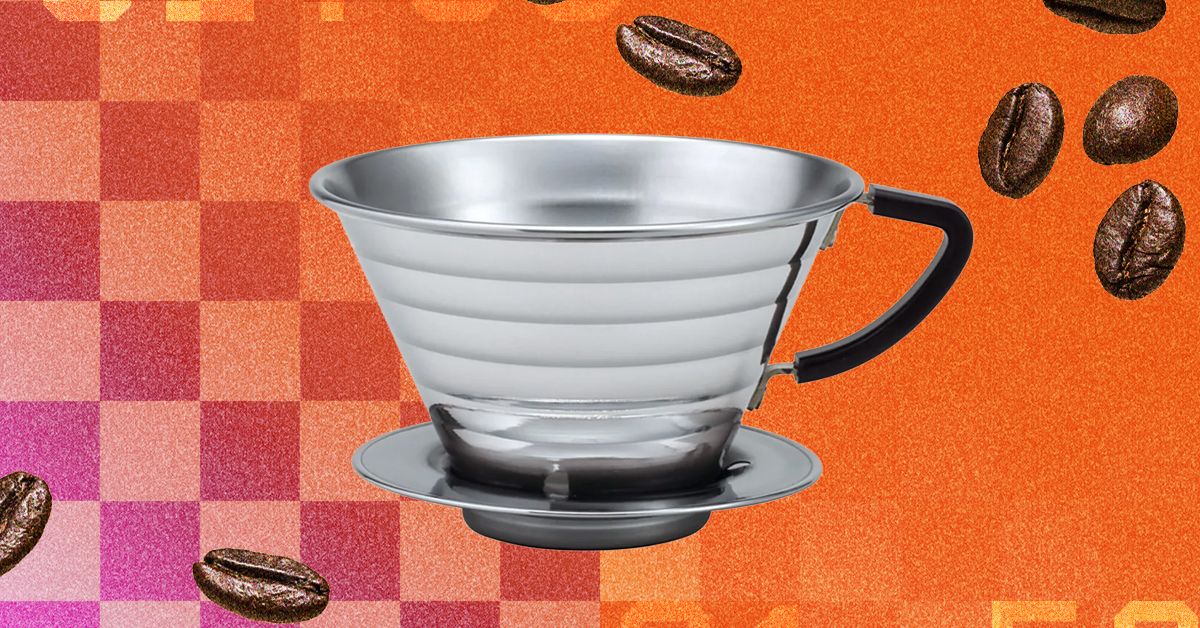
I’m talking about the Kalita Wave, which has long been my favorite way to make coffee. This brewer, born in Japan a couple of decades ago, looks a lot like those other pour-over drippers. But where other brewers’ paper filters are cone-shaped, a Kalita’s filter ends in a 2-inch-wide flat bottom. Instead of letting coffee flow out through one rather large hole at the bottom of the filter, the Kalita drips coffee out more slowly through three small holes.
Photograph: Michael Calore
It’s a style of brewer called a flatbed, so named for that flat-bottomed filter. Kalita isn’t the only one—other notables include the Orea, the Timemore B75, and the December Dripper, a Kalita-style dripper with an adjustable aperture—but flatbeds have earned a sparkling reputation among both serious baristas and people who just want to make a good cup of coffee without feeling like they’re trying to win a blue ribbon at the science fair.
The trick is in the design. That flat bottom lets more of the coffee get fully saturated by distributing the water more evenly among the grounds. You can properly saturate your coffee in a V60 if you pour carefully, but with a Kalita Wave, since more of the grounds are collected at the filter’s flat bottom, it’s easier to evenly wet them. The three small holes control the flow, restricting it just enough so the coffee is suitably extracted before it drips out.
The filter’s wavy design makes it so the paper barely touches the side walls of the dripper. This keeps heat from transferring to the metal dripper, so the water—and your resulting coffee—stays the right temperature. (You’ve probably clocked that, yes, you will need special filters, but the cost is comparable to cone-shaped V60 filters: about 12 or 13 cents each.)
Read the full article here


