







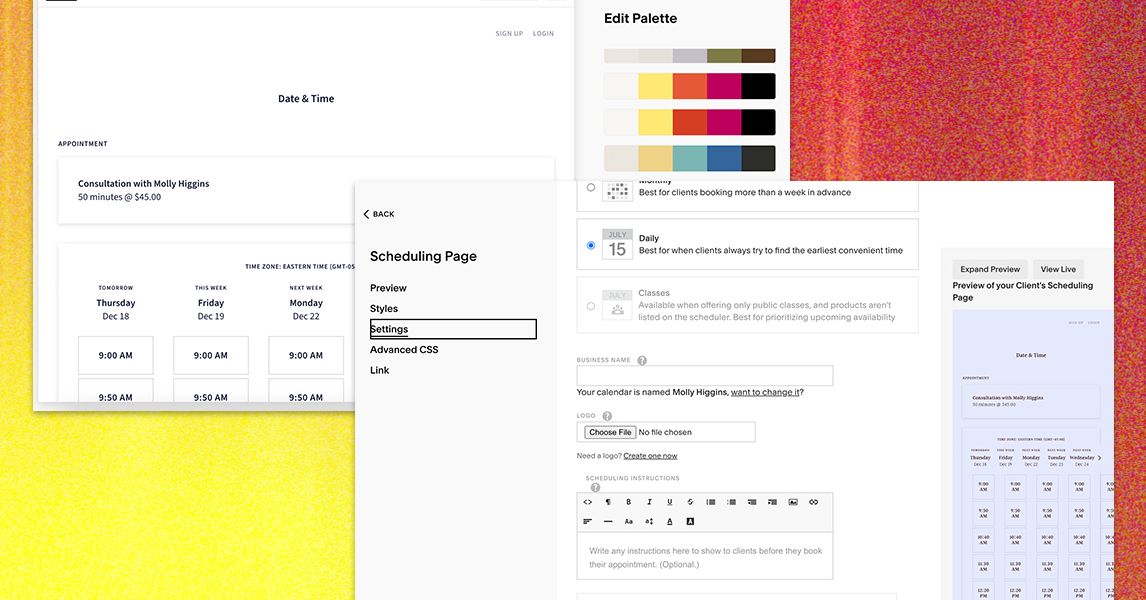
I tried Acuity Scheduling to see if it was the right fit for my growing business. Full disclosure: I’m just a woman, not a business, but I’ve been dabbling in astrology and tarot readings with friends and family. So, I decided to try to see if I could turn my fun side project into a full-fledged side hustle, complete with online booking and payment for my witchy skills.
Although I write for WIRED, I’m far from a coder. I’m not an expert on building websites or knowing the ins and outs of the software we use every day. That’s where Acuity Scheduling comes in. The online booking platform aims to streamline scheduling for growing small businesses and side hustlers such as me. Acuity is a platform that allows you to sell and manage services like virtual consultations, in-person appointments, or classes—you could use it to manage a yoga studio, salon, personal training practice, or landscaping business. It also helps in taking some of the more annoying responsibilities off the business owner’s plate, with automatic appointment updates for the client, and letting clients book, reschedule, or cancel appointments through the platform, rather than, say, by texting the owner a bunch of times.
Initial Set Up
With my aforementioned inexperience, I was anxious about getting an online presence built. But Acuity made the process super simple for a dummy like me. All you have to do is click a button to create an account, and it guides you through the first steps: creating appointment types, setting availability, and customizing the website design. Plus, you get a seven-day free trial, and Acuity doesn’t even require a credit card number until the trial is over—so it’s a true free trial (a rarity these days).
Acuity via Molly Higgins
My first task was creating appointment types, where you’ll create new services or group classes. Since I’m not holding group classes (yet!), I put in the appointment type name, description, duration, price, category, and color. You can also add optional privacy settings, an image, and intake forms. There are also optional integration options, like listing on Airbnb and receiving online payments for your bookings. For payment, you can connect to Stripe, Square, and PayPal, and choose to collect partial payment before the scheduled appointment or not require it. I connected my PayPal account, which was ridiculously seamless.
Once that’s completed, you’ll set your availability. You can change calendar settings to make it more personalized to you, with a unique name, descriptions, location, and optional image. Here’s where you’ll be able to change reply emails and booking notification settings. For actual scheduling, Acuity makes it easy to set regular hours of availability and scheduling limits. With the limits, you’ll be able to set parameters like allowing clients to schedule a certain amount in advance or not allowing them to schedule or cancel appointments after a certain period. You can also set a maximum number of appointments or hours per day.
If you work regular hours each week, you can save those or set override hours for specific days. Since my appointments have different services that range in time, I was also able to easily set different hours for certain appointment types, since a one-card reading takes about a half an hour or less, but a hex appointment takes around an hour and a half. You can also set whether the appointment is in-person or on virtual video, and easily integrate with your Zoom, Google Meet, Join.me, or GotoMeeting account. All I had to do was log in to Zoom to connect accounts and add virtual appointments as an option.
Read the full article here


