

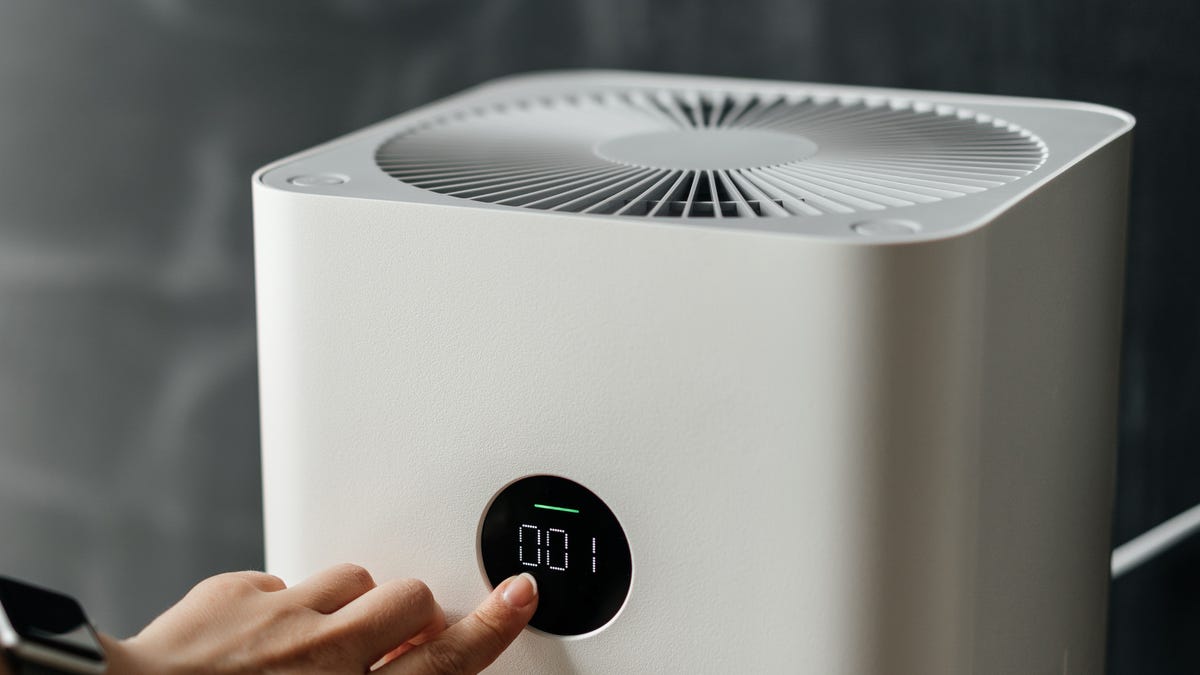
If you have an air purifier, you likely use it one of two ways: You have it set to turn on automatically, or you manually switch it on whenever your allergies are acting up, you’re sick or pollution is high due to wildfires or smog. However, if you’re not performing one additional step before turning on your air purifier, you’re not using it correctly.
To ensure this device can do its job, ask yourself: When was the last time I replaced my air purifier filter? If you can’t remember, it’s probably time to check the filter’s condition.
“If the filter is not replaced regularly, the collected pollutants can build up and clog the filter,” says Dr. Karyi Coyle, a pulmonologist and assistant professor of medicine at New York Medical College. “This leaves more pollutants in the air, and the dirty filter can release contaminants back into your home, making the air more polluted than if you didn’t use an air purifier at all.” Yikes.
To help understand when, why and how often you should change your air purifier’s filter, I consulted health experts for more information.
Don’t miss any of our unbiased tech content and lab-based reviews. Add CNET as a preferred Google source.
The health consequences of not changing your air purifier filter
An air purifier filter’s purpose is to trap pollutants, preventing them from circulating in the air and entering your body. As Coyle mentioned, these pollutants accumulate over time and can clog your filter, reducing airflow and filtration efficiency. Not only will this leave more pollutants in the air, but the filter can even release the particles it previously collected back into the air, further decreasing your air quality.
“This could have respiratory, cardiovascular or allergy health effects,” says Dr. Lyndsey Darrow, epidemiologist and professor of public health at the University of Nevada, Reno.
A dirty air purifier filter is also more susceptible to mold growth, says Coyle, and the air purifier can then circulate those mold spores into your home. “This can cause significant illnesses such as worsening allergies, asthma symptoms and other respiratory problems,” she explains. “A dirty filter can create an indoor air quality that is worse than it would be with no purifier at all.”
In other words, by not changing your air purifier’s filter, you’re creating the opposite effect. All the allergens, viruses, bacteria, pollen and mold spores you want your air purifier to catch can be pushed back into your air, where you can breathe them in and become sick.
Energy usage and cost consequences
Aside from the health-related effects of not regularly changing your air purifier filter, Darrow explains that a clogged filter will also require more energy to push air through, thus increasing energy usage and cost. Over time, this may shorten your air purifier’s lifespan by wearing out the motor or fan, requiring you to buy a new device and spend even more money.
“Continued strain on the motor can result in the need for repairs or unit replacement, which is more costly than changing the filters regularly,” Coyle points out.
The best type of filter for an air purifier
The gold-standard filter recommended by most pulmonary and allergy specialists is the HEPA filter. “This is because it can remove the majority of air contaminants down to the microscopic level,” Coyle says. “This includes removal of dust, pollen, mold spores, dust mites, pet dander and other allergens, as well as most bacteria and viruses.”
Be aware that a HEPA-type or HEPA-like filter is not the same as a true HEPA filter.
The US Environmental Protection Agency states that HEPA filters typically remove at least 99.97% of airborne particles that measure 0.3 microns (µm) in size. This is particularly beneficial because, according to pediatric allergist and clinical immunologist Dr. Zachary Rubin, who was consulted for the CNET lab exclusive on the best air purifiers for cold and flu season, viruses like the flu and coronavirus are carried in respiratory aerosols that are usually under 5 μm in size, and many are under 1 μm.
While HEPA filters remove many particles, chemical fumes, cigarette smoke and odors are not among them. That’s why Coyle recommends purchasing a HEPA filter with an activated carbon filter, which will capture these environmental pollutants. For removing volatile organic compounds, gases emitted by products such as paint, cleaning supplies and furniture, the EPA advises using a thick activated carbon filter.
There is also a pre-filter, which Coyle describes as another layer of respiratory protection. It removes larger particles, such as lint, hair and dust clumps, keeping them out of your HEPA filter and prolonging its life.
“If you’re concerned about airborne allergens, molds or wildfire smoke particles, having a HEPA filter is important,” says Darrow. “If you’re more concerned about gases (including volatile organic compounds) or odors, an activated carbon filter should be more effective for that purpose.”
There are filterless air purifiers known as ionizers that claim to work by charging airborne particles, causing them to fall from the air or cling to other surfaces. However, Darrow says that these devices can produce ozone, a gaseous pollutant well established as a respiratory irritant. That’s why HEPA and activated carbon filters are safer.
Before purchasing a filter for your air purifier, make sure it’s the one the manufacturer recommends, as you’ll want the right product for your specific model and room size.
How often should you change an air purifier filter?
Since there is no universally accepted recommendation for when to replace your air purifier’s filter, you should consult the manufacturer’s guide for your specific device. However, Darrow says that it also depends on how polluted your air is and how often you use your air purifier.
“For example, if the manufacturer-recommended replacement frequency for a HEPA filter is every 6 months, it may need to be changed more frequently if used during wildfire events or in homes with more allergens like mold or pet dander,” Darrow states.
In general, changing your air purifier filter every three to six months is recommended, depending on the type of filter, usage and air quality. Coyle provides the following guide:
- Main HEPA filters: Every six to 12 months.
- Carbon filters: Every three to six months, or when odors return.
- Pre-filters: Every one to three months.
But again, factors like usage, smoke, high pollution, allergies or pets may require you to change your air purifier’s filter more often. That’s why you’ll want to look for signs — such as reduced airflow, increased allergies, more dust in your home or lingering odors — that your filter may need to be changed.
Can you wash an air purifier filter instead of replacing it?
Most HEPA and carbon filters are disposable, and if you wash them, they can become damaged and ineffective — especially when it comes to capturing finer air pollutant particles such as bacteria and allergens. If not completely dry before they’re reinstalled, the filter may also become a breeding ground for mold.
“It is vital to always check your manufacturer’s manual to see if your specific filter is washable, as cleaning non-washable types can harm unit performance and air quality,” Coyle emphasizes.
The bottom line
Before you turn your air purifier on, consult the manufacturer’s instructions to ensure your filter is changed correctly and on time. Also note that if you have pets, live in a high-pollution area or experience wildfires, you’ll likely need to change the filter more frequently. And lastly, keep an eye out for reduced performance from your air purifier, which could indicate the filter needs to be changed.
Your air purifier’s role is to purify the air you breathe in the name of your health. Not changing your filter can have the opposite effect. So, while a new air purifier filter every couple of months may be money you don’t want to spend, clean air and a clean bill of health are priceless.
Read the full article here